A Punjabi wedding is a viah (ਵਿਆਹ), and the Sikh ceremony at its heart is the Anand Karaj (ਅਨੰਦ ਕਾਰਜ), "the ceremony of bliss". The main moments run in order: roka, maiyan, jaggo, milni, the four lavan (ਲਾਵਾਂ) that make the marriage, and the doli farewell. The word you'll say most is vadhaaiyan (ਵਧਾਈਆਂ), "congratulations".
I have been to a lot of Punjabi weddings, and for the first half of them I was a beautifully dressed bystander. I knew a viah (wedding) was happening. I could not have told you what the milni was, or why everyone suddenly went quiet for the lavan, or what the aunties meant when they started talking about the doli. I clapped when other people clapped. It was only when my own cousin got married and I was actually in the family party, expected to know things, that I sat down and learned the vocabulary. A Punjabi wedding is not one event, it is a sequence of named moments, and the words are the map.
The big word: Anand Karaj
The Sikh wedding ceremony itself is the Anand Karaj (ਅਨੰਦ ਕਾਰਜ), literally "the ceremony of bliss". It takes place in the Gurdwara, in the presence of the Guru Granth Sahib, and it is the heart of the whole celebration. Everything else, the dancing, the food, the days of build-up, orbits around this one morning. If the Gurdwara is new to you, it helps to know the phrases you will hear at the Gurdwara first.
| English | Gurmukhi | Pronunciation |
|---|---|---|
| Wedding | ਵਿਆਹ | viah |
| The Sikh wedding ceremony | ਅਨੰਦ ਕਾਰਜ | anand kaaraj |
| Groom | ਲਾੜਾ | laaṛa |
| Bride | ਲਾੜੀ | laaṛi |
| In-laws | ਸਹੁਰੇ | sohre |
What are the Punjabi wedding ceremonies, in order?
This is the sequence that confused me for years, laid out plainly:
- Roka / Kurmai (ਰੋਕਾ / ਕੁੜਮਾਈ): the engagement, the families formally agreeing to the match.
- Maiyan / Vatna (ਮਾਈਆਂ / ਵਟਣਾ): the turmeric paste ceremony at home before the wedding, meant to make the bride and groom glow.
- Jaggo (ਜਾਗੋ): the loud, joyful night-before procession, decorated pots on heads, singing through the streets. Nobody sleeps.
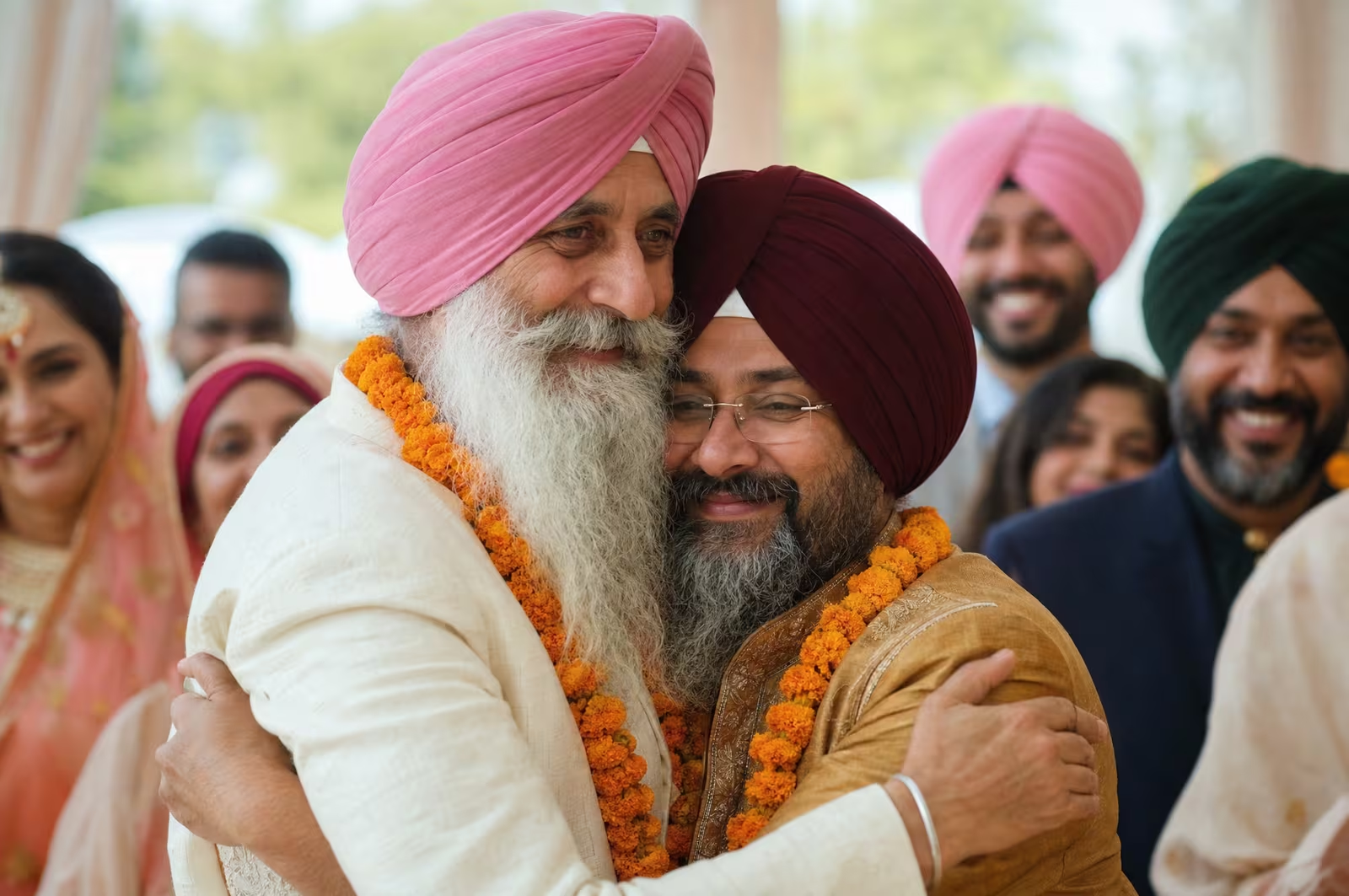
- Milni (ਮਿਲਣੀ): the formal meeting of the two families on the wedding morning, elder matched to elder, with garlands and often gifts. This is the one I most badly misunderstood for years.
- Lavan (ਲਾਵਾਂ): the four sacred verses of the Anand Karaj. The couple circles the Guru Granth Sahib once for each lavan. This is the actual marriage, the four rounds.
- Doli (ਡੋਲੀ): the emotional farewell as the bride leaves her parents' home for her new family. The tears here are real, every time.
People at the wedding
Knowing who is who saves a lot of confused smiling:
| Role | Gurmukhi | Pronunciation |
|---|---|---|
| Groom's party | ਬਰਾਤ | baraat |
| Bride's brother | ਭਰਾ / ਵੀਰ | bhraa / veer |
| Maternal uncle (key role) | ਮਾਮਾ | maama |
| Mother-in-law | ਸੱਸ | sass |
| Father-in-law | ਸਹੁਰਾ | sohra |
The maama (mother's brother) carries special weight at a Punjabi wedding, with his own customs and gifts. If the relative words trip you up, sass versus sohra versus the rest, I mapped the whole family tree in Punjabi family words and relatives, and it makes the wedding roles much easier to follow.
How do you say congratulations at a Punjabi wedding?
Beyond the ceremony names, here is the conversational set for the day:
- Vadhaaiyan! (ਵਧਾਈਆਂ!): "congratulations!" The word you will say a hundred times.
- Bahut sohna jodaa hai (ਬਹੁਤ ਸੋਹਣਾ ਜੋੜਾ ਹੈ): "what a lovely couple."
- Viah kado hai? (ਵਿਆਹ ਕਦੋਂ ਹੈ?): "when is the wedding?"
- Rabb sukhi vasaaye (ਰੱਬ ਸੁਖੀ ਵਸਾਏ): "may God keep them happy", the blessing elders give the couple.
The joy of a Punjabi wedding, all that bhangra and gidda and noise, shares its DNA with the festival celebrations I wrote about in Punjabi festivals: Vaisakhi and Lohri. Same drum, different occasion. The boliyan you hear at weddings are a way into the language too, which I cover in learning Punjabi through folk songs.
Why these words are worth the effort
Here is what I have come to believe. A wedding is the one place where three generations of a Punjabi family are all in the same room at once, and the words floating around, lavan, milni, doli, are the living thread between them. When the grandparents say doli and tear up, and the kids have no idea why, that is exactly the gap I built Panjabi Go to close. The hard part is never the meaning you can look up, it is hearing vadhaaiyan said the way an auntie shouts it across a hall, or getting the soft ṛ in laaṛa right, and that is what native-quality audio and pronunciation feedback are for. Learn even five of these words before the next wedding you go to, and you will stop being the well-dressed bystander. You will be in it.