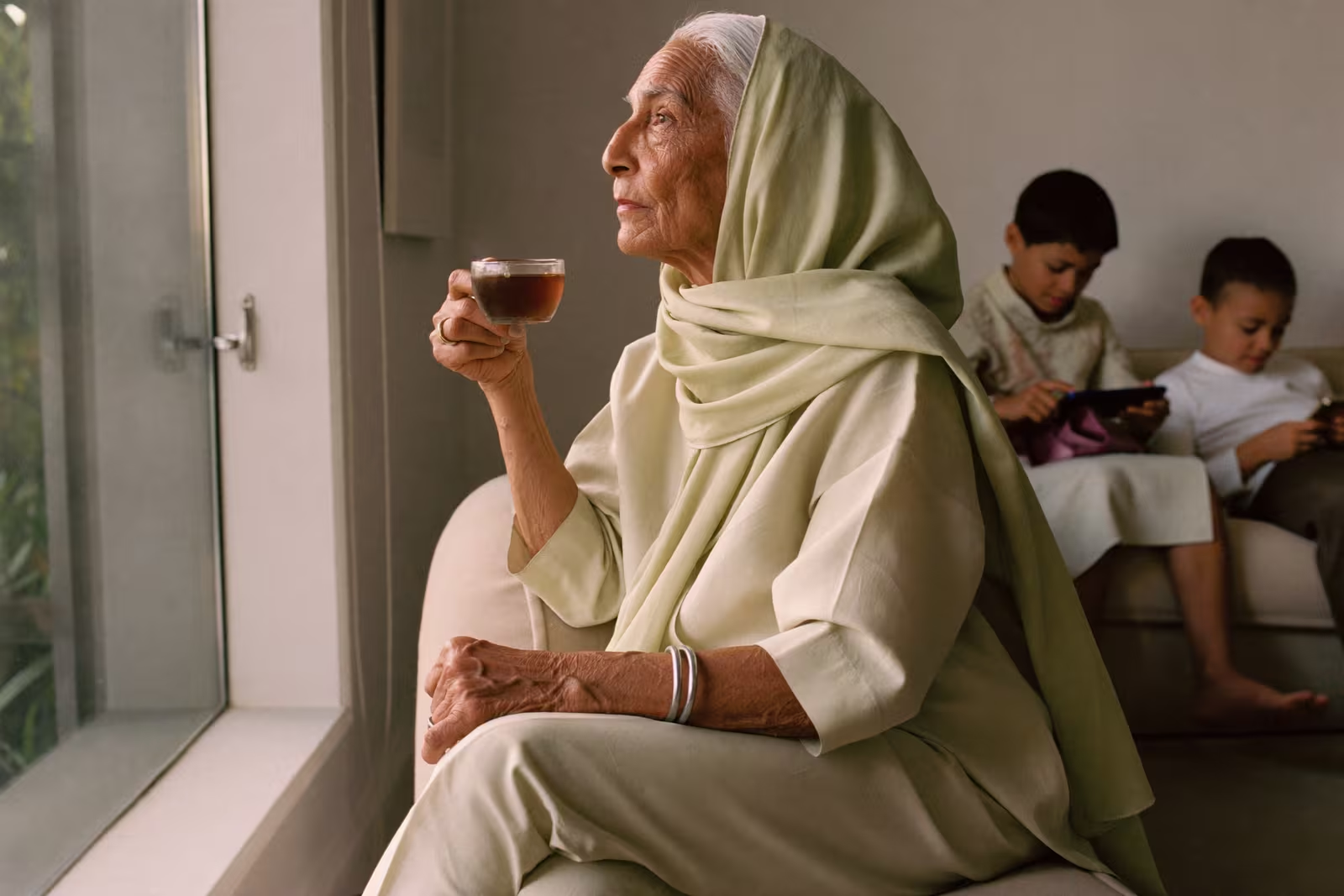
Punjabi is fading in the diaspora through language shift, not choice: grandparents speak it, parents mix it with English, and children understand it but answer in English. Gurmukhi has to be taught, so the script goes first. What slows it: expecting children to speak back, tying the language to people, teaching the script early, and short daily practice for adults.
There's a strange fact that took me a long time to sit with. Punjabi is one of the most-spoken languages on earth, with more than 150 million speakers. By any global measure it is thriving. And yet in my own generation, I have watched it start to slip, in myself and in many of the people I grew up with.
That contradiction, a language that is huge and fragile at the same time, is the whole story of the diaspora. I want to walk through why it happens, because understanding the mechanism is the only thing that ever helped me push back against it.
How it slips away at the dinner table
Nobody decided to stop speaking Punjabi. That's the first thing to understand. There was no meeting, no choice, no moment.
My parents spoke Punjabi to me, because it was the only language they spoke, and I spoke it back, quite well. But school was English, friends were English, and before long English was the language I thought in. Punjabi became the language of home, and only of home.
That last bit is the trap. Plenty of people in my generation became what linguists call passive bilinguals: full comprehension, near-zero production. I kept speaking, but I felt the slide. I could follow a heated argument across a wedding table about whose biryani was better, and joining it took more nerve every year. And the gap between understanding and speaking is brutal, because from the outside it looks like you're fine. The family assumes you've "got it." Only you know that the words don't come when you open your mouth.
What is the three-generation rule?
Researchers who study immigrant languages keep finding the same grim pattern, sometimes called the three-generation model:
- First generation: speaks the heritage language, learns enough of the new one to get by.
- Second generation: bilingual, but the new language dominates. Heritage language becomes the "home and grandparents" language.
- Third generation: speaks the new language only. Understands fragments. Heritage language is gone except for food words and swear words.
I am, depending on how you count, somewhere between two and three. And I felt the gears of that machine turning without ever seeing them. It is not a failure of love or pride. Families who are fiercely proud of being Punjabi lose the language just as fast as anyone, because pride lives in the heart and language lives in daily use, and those are different muscles. Names outlast the language too: plenty of families keep them long after the meaning behind Punjabi names is forgotten.
Why Punjabi specifically gets hit hard
Every heritage language faces this, but a few things make Punjabi especially vulnerable in the West.
The script breaks the chain. A child might pick up spoken Punjabi by ear, but Gurmukhi (ਗੁਰਮੁਖੀ) has to be actively taught. When parents themselves were raised abroad and can speak but not read, the written language dies a generation earlier than the spoken one. The sound might survive in fragments; the akhar don't survive at all without deliberate effort. For Sikh families that also means losing direct access to Gurbani, which I wrote about in learning Punjabi for Gurbani.
Hindi and Urdu crowd in. Through Bollywood and a shared region, a lot of diaspora kids absorb a bit of Hindi from media and assume it's "close enough." It isn't (I got into the Punjabi vs Hindi differences elsewhere). But "close enough" is how a distinct language gets swapped out for a more dominant cousin.
There was no easy tool. This one is personal. When I finally wanted to fix my own Punjabi as an adult, the options were dire. Private tutors were expensive and awkward to schedule around a job. Weekend classes at the Gurdwara were great for kids but assumed you lived nearby and were, well, a kid. And Duolingo, the obvious default for any other language, simply doesn't offer Punjabi at all. The infrastructure that exists for Spanish or French just isn't there. I wrote about hitting that exact wall in why I built the app.
How do you stop Punjabi disappearing in your family?
Here's the more hopeful half, because language shift is a tendency, not a destiny. Communities reverse it all the time. The levers that work, from what I've read and lived:
Make the child produce, not just absorb. The single biggest factor is whether the kid is required to speak back. A household where Punjabi answers are expected, even imperfect ones, raises speakers. A household where Punjabi questions get English answers (mine) raises understanders. Gently insisting on a Punjabi reply, even when it's slow and broken, is the whole ballgame.
Tie it to people, not lessons. Kids learn the language of whoever they badly want to talk to. A grandparent who only speaks Punjabi is worth more than any curriculum, because the motivation is real. If your child has a nani or dada they adore, that relationship is your greatest asset. Protect those phone calls. They are also where you hear the old Punjabi proverbs that rarely make it into a lesson.
Teach the script early, while it's still a game. Gurmukhi learned at seven is play. Gurmukhi attempted at thirty is homework. I've collected the things that actually work for teaching kids at home, and starting the akhar young is near the top.
Lower the friction for the adults too. A lot of us are trying to learn alongside our kids, repairing our own broken Punjabi in our thirties and forties. That only sticks if it fits real life: a few minutes a day, repeated, not a two-hour class on a Sunday you'll skip when life gets busy. Short daily reps with spaced repetition (the same logic that makes the streak addictive) beat heroic weekend efforts that fizzle by February.
Why I refuse to be fatalistic about it
It would be easy to read all this and conclude the language is simply on a one-way slide and we should mourn it gracefully. I don't accept that, and not for sentimental reasons.
Languages that were dying have been pulled back: Welsh, Hebrew, Hawaiian, Māori. The thing they had in common wasn't nostalgia. It was tools, deliberate effort, and making the language easy to use again in ordinary life. Punjabi has more than 150 million speakers and a living homeland. It is nowhere near the edge those languages stood on. The only thing it lacks, in the diaspora specifically, is the modern scaffolding every other major language already has.
That's the gap I decided to spend my life on. Not because an app saves a language by itself, it doesn't, but because the missing rung on the ladder was a place anyone could start, in five minutes a day, with native-quality audio in their ear and the actual script on the screen. The dinner-table conversation I couldn't join? My kids are going to be able to join theirs.
That's the whole point.