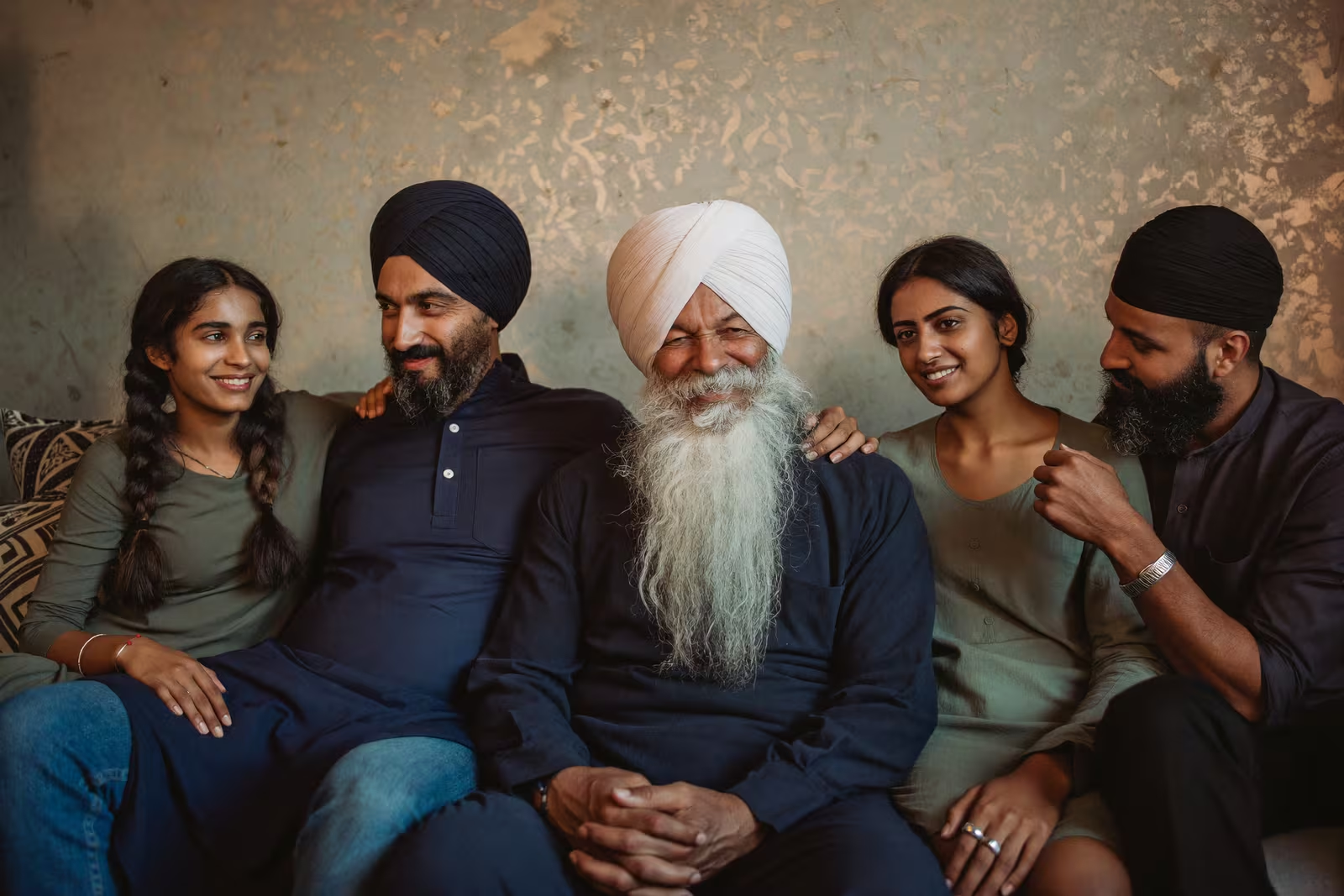
Punjabi family words usually have separate names for maternal and paternal relatives, and some also encode birth order. Your father's brothers are taaya ji (older) and chaacha ji (younger), while your mother's brother is maama ji. Grandparents split the same way: dada ji and dadi ji on your father's side, nana ji and nani ji on your mother's.
I grew up speaking Punjabi but I was a fraud at the family stuff. At every wedding and every Sunday lunch I would smile and nod while an aunty explained she was my taaya ji's daughter, and I had no idea what taaya actually encoded. To me everyone was just "uncle" and "aunty". It took me years, and a slightly embarrassing moment, to realise that Punjabi family words are not decoration. They are a map of the whole family, and English simply does not have one.
What startles English speakers is that Punjabi usually has separate words for maternal and paternal relatives. Your dad's brother and your mum's brother are not both "uncle", they have different names. That precision is the whole charm, and once you see the pattern, it is useful.
The immediate family
| English | Gurmukhi | Pronunciation |
|---|---|---|
| Mother | ਮਾਂ / ਮੰਮੀ | maa / mummy |
| Father | ਪਿਓ / ਡੈਡੀ | pio / daddy |
| Son | ਪੁੱਤਰ | puttar |
| Daughter | ਧੀ | dhee |
| Brother | ਭਰਾ | bharaa |
| Sister | ਭੈਣ | bhaiṇ |
| Husband | ਪਤੀ | patee |
| Wife | ਪਤਨੀ | patnee |
You'll often hear the affectionate veer / veere (ਵੀਰ) for brother and bhaina for sister.
What do you call your grandparents in Punjabi?
| English | Gurmukhi | Pronunciation | Side |
|---|---|---|---|
| Paternal grandfather | ਦਾਦਾ ਜੀ | dada ji | father's |
| Paternal grandmother | ਦਾਦੀ ਜੀ | dadi ji | father's |
| Maternal grandfather | ਨਾਨਾ ਜੀ | nana ji | mother's |
| Maternal grandmother | ਨਾਨੀ ਜੀ | nani ji | mother's |
The ji (ਜੀ) you keep seeing is a marker of respect, added to elders' titles almost always. Dropping it can sound abrupt.
What are the Punjabi words for aunt and uncle?
This is where Punjabi really outshines English. Pay attention to the pattern, the word tells you exactly how someone is related.
On your father's side:
| Relationship | Gurmukhi | Pronunciation |
|---|---|---|
| Father's older brother | ਤਾਇਆ ਜੀ | taaya ji |
| His wife | ਤਾਈ ਜੀ | taaee ji |
| Father's younger brother | ਚਾਚਾ ਜੀ | chaacha ji |
| His wife | ਚਾਚੀ ਜੀ | chaachee ji |
| Father's sister | ਭੂਆ ਜੀ | bhooaa ji |
| Her husband | ਫੁੱਫੜ ਜੀ | phuphphaṛ ji |
On your mother's side:
| Relationship | Gurmukhi | Pronunciation |
|---|---|---|
| Mother's brother | ਮਾਮਾ ਜੀ | maama ji |
| His wife | ਮਾਮੀ ਜੀ | maamee ji |
| Mother's sister | ਮਾਸੀ ਜੀ | maasee ji |
| Her husband | ਮਾਸੜ ਜੀ | maasaṛ ji |
The moment it finally made sense to me was when I learned that taaya and chaacha are not just two words for "uncle on dad's side", they encode birth order. Taaya is dad's older brother, chaacha is his younger brother. I had been calling both of my father's brothers the same English "uncle" my whole life, and the Punjabi already knew which one was senior. English needs a whole sentence to say what Punjabi says in a single word.
In-laws and cousins
Punjabi has dedicated terms for in-laws too, sass (ਸੱਸ, mother-in-law), sauhra (ਸਹੁਰਾ, father-in-law), jeeja ji (sister's husband), and more. Cousins are usually addressed with the sibling words (veer, bhaiṇ) combined with the relevant aunt/uncle relationship, there's no separate generic "cousin."
The trick that finally made it stick
What worked for me was to stop treating these as a flat list and start using the system itself as the memory aid. The Punjabi kinship words are not random, they are built on two questions: which side of the family, and elder or younger. So I sat down with an actual person in mind for each slot. My dad's older brother became my anchor for taaya ji, my mum's sister for maasi ji, and suddenly the abstract grid had faces on it. Once a real relative is attached to a word, the word stops being vocabulary and becomes a fact about someone you love. The Punjabi words for feelings are what let you tell them so. And say the ji. I dropped it once as a kid and got a look that taught me faster than any lesson could. The easiest first conversation with any of them is small talk about the weather in Punjabi.
For diaspora parents, these are also the first words to teach kids, because the words have faces attached. See How to Teach Your Kids Panjabi at Home, and if you are starting from zero yourself, the beginner's guide is where I would point you.
I wish I'd had something that drilled the maternal/paternal and elder/younger splits into me before I spent years nodding politely at relatives I couldn't name. That frustration is part of why I built Panjabi Go: native-quality audio so the tricky bhooaa / phuphphaṛ sounds land right, pronunciation feedback, Gurmukhi from scratch, and short daily lessons with spaced repetition so the words actually stay. Start learning free.
Sources
- Basic Punjabi 3.2: Relationship Vocabulary (Michigan State University)
- Basic Punjabi 2.4: Honorific and Respectful Form (Michigan State University)
- Sass (ਸੱਸ) in Maya Singh's Panjabi Dictionary, 1895 (University of Chicago DSAL)
- Sahura (ਸਹੁਰਾ) in Maya Singh's Panjabi Dictionary, 1895 (University of Chicago DSAL)