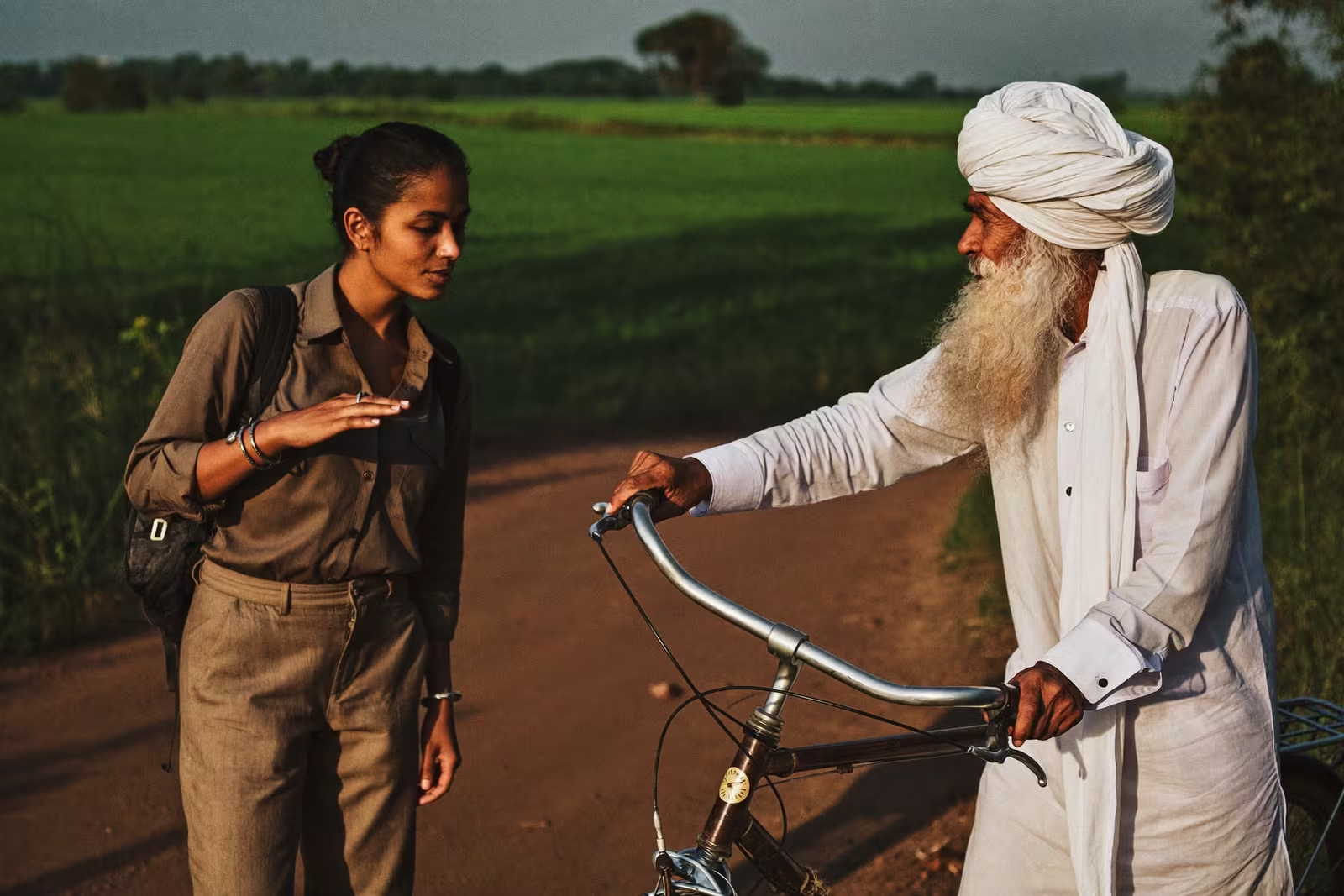
Left in Punjabi is khabbe (ਖੱਬੇ), right is sajje (ਸੱਜੇ) and straight is sidhha (ਸਿੱਧਾ). To ask the way, use kithe (ਕਿੱਥੇ, where) in the frame ___ kithe hai?, as in Gurdwara kithe hai? ("Where is the Gurdwara?"). Expect answers like sajje muṛo ("turn right"), usually pinned to a landmark rather than a street name.
I once spent twenty minutes walking the wrong way through a town in Punjab because someone gave me clear, kind, detailed directions and I caught maybe one word in five. They said sajje, they pointed, I smiled, and then I turned khabbe anyway. Directions are humbling like that. You do not just need the vocabulary, you need it fast enough to act on while a stranger is gesturing at a junction.
So here is the small set of words that turns "I am lost" into "I can follow that," plus the phrases to ask in the first place.
How do you say left, right and straight in Punjabi?
These three are the core. Get them automatic and you can follow most of what anyone tells you on a street.
| English | Gurmukhi | Pronunciation |
|---|---|---|
| left | ਖੱਬੇ | khabbe |
| right | ਸੱਜੇ | sajje |
| straight | ਸਿੱਧਾ | sidhha |
| back / behind | ਪਿੱਛੇ | pichhe |
| front / ahead | ਅੱਗੇ | agge |
| turn | ਮੁੜੋ | muṛo |
| stop | ਰੁਕੋ | ruko |
The pair that tripped me up is khabbe (left) and sajje (right), because under pressure they blur. The trick that fixed it for me: most people are right-handed, and sajje / "right" both feel like the "strong" side. Silly, but it stuck.
Near, far, here, there
Directions are useless without distance, so these come right after:
| English | Gurmukhi | Pronunciation |
|---|---|---|
| near | ਨੇੜੇ | neṛe |
| far | ਦੂਰ | door |
| here | ਇੱਥੇ | itthe |
| there | ਉੱਥੇ | utthe |
| next to | ਕੋਲ | kol |
How do you ask for directions in Punjabi?
To ask where something is, you want kithe (ਕਿੱਥੇ), "where." The basic frame is ___ kithe hai?, "where is ___?"
- Gurdwara kithe hai? (ਗੁਰਦੁਆਰਾ ਕਿੱਥੇ ਹੈ?) "Where is the Gurdwara?"
- Bazaar kithe hai? "Where is the market?"
- Bus adda kithe hai? "Where is the bus stand?"
Kithe is one of a small family of question words that unlock a huge amount of conversation, and if you have not met the rest yet, the Punjabi question words guide lays them all out: ki (what), kaun (who), kado (when) and so on.
A couple more openers that make you sound less like a textbook:
- Maaf karo, ___ da rasta kihda hai? (ਮਾਫ਼ ਕਰੋ) "Excuse me, which is the way to ___?"
- Eh rasta theek hai? "Is this the right way?"
The word rasta (ਰਸਤਾ) is your friend here, it means "road" or "way."
Following the answer
Here is roughly what comes back, and the shape to listen for:
- Sidhha jao. (ਸਿੱਧਾ ਜਾਓ) "Go straight."
- Sajje muṛo. "Turn right."
- Aglli galli khabbe. "Next street, left."
- Bahut neṛe hai. "It is very near."
- Utthe, Gurdware de kol. "There, next to the Gurdwara."
Notice how often a landmark does the real work. In a lot of Punjab, nobody navigates by street names, they navigate by the Gurdwara, the big tree, the sweet shop. So when you ask, expect the answer to hang off a nishaani, a landmark, not a map.
Put it together
A full little exchange:
- You: Maaf karo, bus adda kithe hai? "Excuse me, where is the bus stand?"
- Them: Sidhha jao, fer sajje muṛo. Bahut door nahi. "Go straight, then turn right. Not very far."
- You: Dhanvaad. "Thank you."
That is enough to actually get somewhere. Directions live right alongside the rest of the on-the-road essentials in the phrases for travellers post, which I would pair with this one and the basics for visiting Punjab before any trip. Once you reach the bazaar, the phrases for shopping and bargaining take over.
The catch is that none of this helps if you cannot parse sajje muṛo the instant it is said, while someone is already pointing. Reading it slowly off a page is one skill, hearing it at speed is another, and the second is the one that actually gets you to the bus stand. That gap is exactly why I leaned on native-quality audio and short daily repetition rather than a wordlist, hearing khabbe and sajje enough times that they stopped being a guess. If you want that kind of listening practice, it is the core of how Panjabi Go is built.