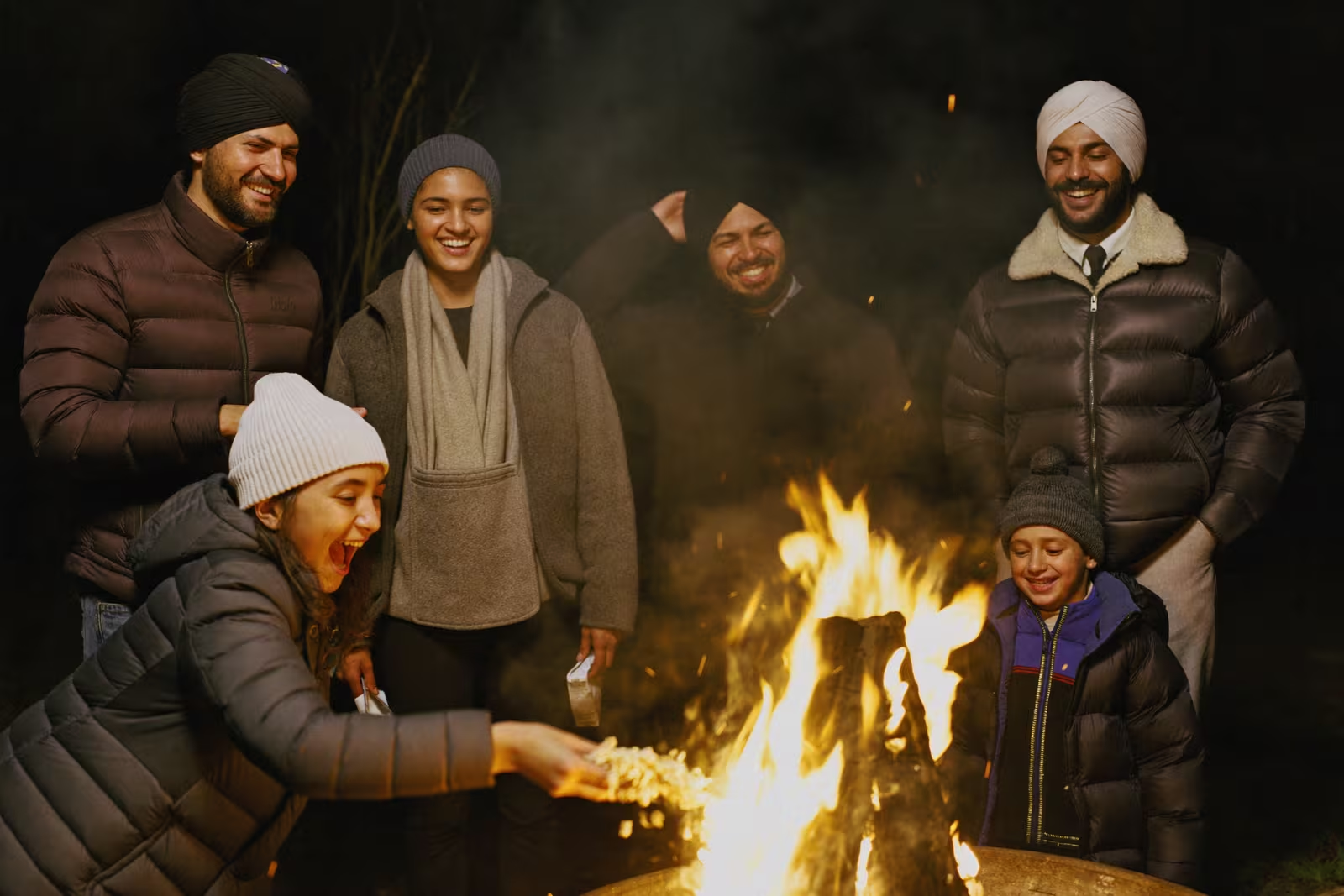
Vaisakhi (ਵਿਸਾਖੀ), around 13 to 14 April, is a harvest festival that also marks Guru Gobind Singh founding the Khalsa in 1699. Lohri (ਲੋਹੜੀ), in mid-January, celebrates the end of winter around a bonfire, and Bandi Chhor Divas falls at Diwali. Each is greeted with vadhaiyan (congratulations), as in Lohri diyan vadhaiyan.
Every January when I was a kid, my dad would build a Lohri bonfire in the back garden and we'd stand around it tossing handfuls of popcorn and sesame into the flames while the older relatives sang songs I half-knew. I understood roughly what was happening. I could not have told you a single word of the songs. That gap, knowing a festival in my bones but not in my language, is the thing I spent years closing as an adult. This guide walks through the major Punjabi festivals, what they celebrate, and the vocabulary and greetings tied to each, because that is exactly where I found the words finally sticking.
What is Vaisakhi (ਵਿਸਾਖੀ)?
The big one. Vaisakhi, around 13 to 14 April, is both a harvest festival and a date of huge Sikh significance, it marks the founding of the Khalsa by Guru Gobind Singh in 1699. Expect bhangra, gidda (the women's folk dance), drums (dhol), and Nagar Kirtan processions.
- Greeting: Vaisakhi diyan lakh lakh vadhaiyan (ਵਿਸਾਖੀ ਦੀਆਂ ਲੱਖ ਲੱਖ ਵਧਾਈਆਂ) : "many, many congratulations on Vaisakhi."
When is Lohri (ਲੋਹੜੀ) celebrated?
Lohri, in mid-January, celebrates the end of winter and the coming harvest. Families gather around a bonfire (the centrepiece of the festival), toss in sweets, popcorn, and sesame, sing folk songs, and dance. It's especially joyful for families with a new baby or marriage that year. If that new marriage is yours, I wrote about learning Punjabi for your partner's family.
- Greeting: Lohri diyan vadhaiyan (ਲੋਹੜੀ ਦੀਆਂ ਵਧਾਈਆਂ).
- Festival foods: gud (ਗੁੜ, jaggery), moongphali (ਮੂੰਗਫਲੀ, peanuts), rewri (sesame sweets).
Bandi Chhor Divas / Diwali (ਬੰਦੀ ਛੋੜ ਦਿਵਸ)
Coinciding with Diwali, Bandi Chhor Divas ("Day of Liberation") commemorates Guru Hargobind Ji's release from imprisonment. The Golden Temple in Amritsar is lit with thousands of lamps, a breathtaking sight. Expect diye (oil lamps), fireworks, and mithaai (sweets).
Other moments in the calendar
- Gurpurabs (ਗੁਰਪੁਰਬ): celebrations of the Gurus' birthdays, especially Guru Nanak Dev Ji's, marked with prayer, langar, and processions.
- Teej (ਤੀਜ): a monsoon festival celebrated by women, with swings and gidda.
- Maghi: following Lohri, of religious significance.
The vocabulary festivals teach you
What I eventually realised is how much language is already baked into the celebrations. The greeting vadhaiyan (congratulations), the foods (gud, mithaai from Punjabi food words), the months (Vaisakh, from days and months). I had been saying half of these my whole life without ever clocking them as words I could read and break down. Some cross into Urdu too, mithaai among them, and I look at that shared vocabulary in how Punjabi and Urdu compare. For diaspora families especially, the festival is where the words arrive with food, music, and meaning already attached, which is why they stuck for me when flashcards never did. If you have kids, the activities in How to Teach Your Kids Panjabi at Home lean on exactly this.
So the next time you are standing at the Gurdwara for a Gurpurab, or around the Lohri fire trying to mouth along to a song everyone else seems to know, you do not have to be the one person who only understands the gist. That is the moment Panjabi Go was built for. You hear the greetings and festival vocabulary in native-quality audio, get pronunciation feedback when you say them back, and learn to read the Gurmukhi from scratch, all in short daily lessons that use spaced repetition so the words are there when the dhol starts. Start free and walk into the next gathering knowing the words.