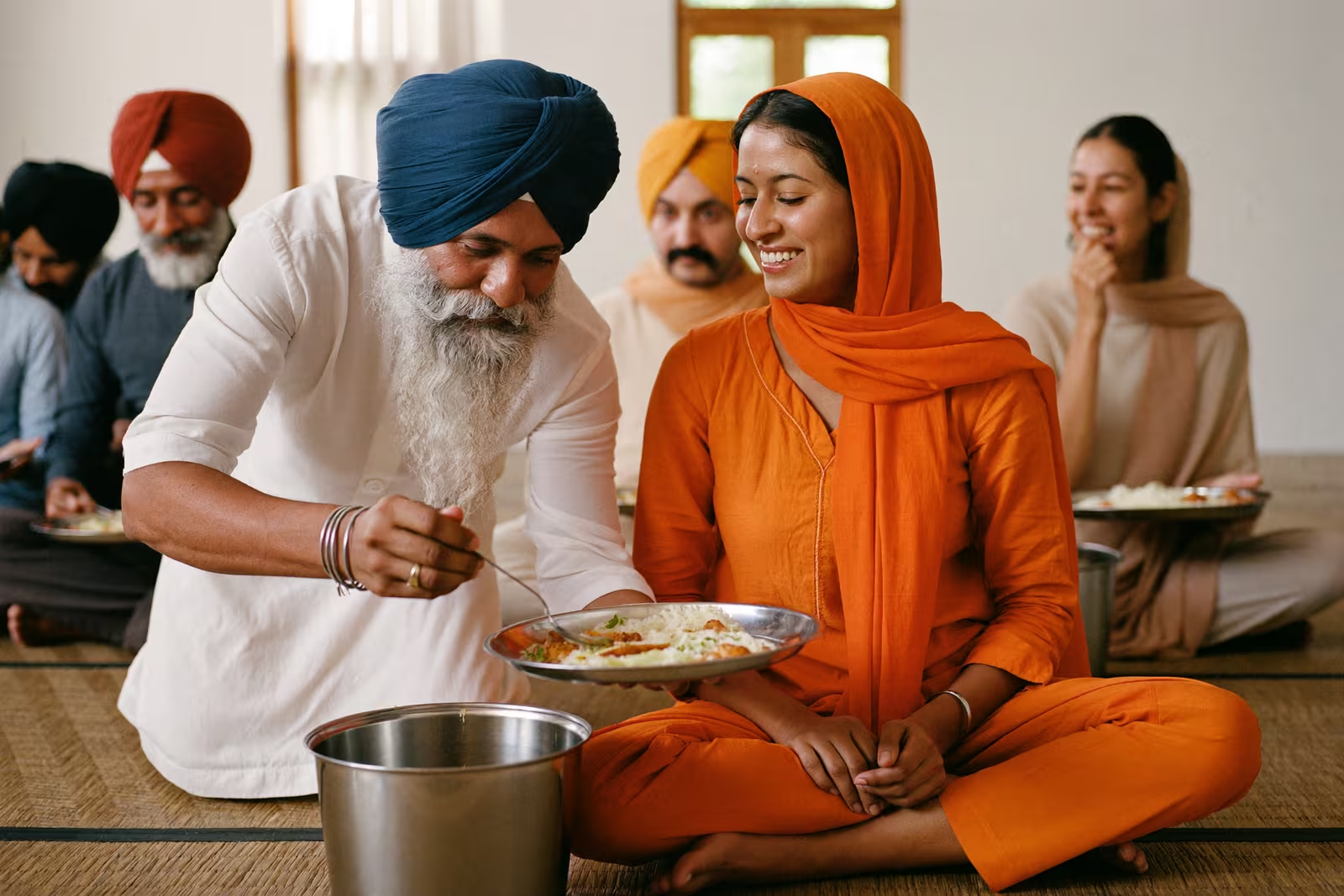
At the Gurdwara you will hear Sat Sri Akal (ਸਤਿ ਸ੍ਰੀ ਅਕਾਲ) as the greeting, ardas (ਅਰਦਾਸ) for the standing communal prayer, parshad (ਪ੍ਰਸ਼ਾਦ) for the sweet offering placed in your hands, langar (ਲੰਗਰ) for the free community meal and seva (ਸੇਵਾ) for selfless service. In the langar hall, bas ji, dhanvaad means "that is enough, thank you".
The first time I did seva in the langar hall as a grown adult, an uncle handed me a giant steel pot and said something quick that I half-caught, smiled at, and completely failed to act on. He had asked me to carry it to the tava (the griddle station). I carried it to the bin area instead. Nobody minded, langar runs on patience, but I stood there realising that the Gurdwara was full of words I had heard my whole life without ever needing to use them. Understanding the room is not the same as moving through it. So here is the vocabulary that finally let me stop nodding and start helping.
How do you greet people at the Gurdwara?
The greeting you will hear most is Sat Sri Akal (ਸਤਿ ਸ੍ਰੀ ਅਕਾਲ), said with hands folded. Among the Sangat you will also hear the fuller Sikh greeting:
- Waheguru Ji Ka Khalsa, Waheguru Ji Ki Fateh (ਵਾਹਿਗੁਰੂ ਜੀ ਕਾ ਖਾਲਸਾ, ਵਾਹਿਗੁਰੂ ਜੀ ਕੀ ਫ਼ਤਿਹ): the formal greeting, often shortened in speech but said in full from the stage.
If you want the full breakdown of the everyday greeting and when each version fits, I wrote that up separately in Sat Sri Akal and Punjabi greetings.
Before you enter the darbar (the main hall) you cover your head and remove your shoes. Two words attach to this:
| English | Gurmukhi | Pronunciation |
|---|---|---|
| Head covering | ਰੁਮਾਲ | rumaal |
| Shoes | ਜੁੱਤੀ | jutti |
| Shoe counter / store | ਜੋੜਾ ਘਰ | joṛa ghar |
The joṛa ghar is literally the "shoe house", the rack room where you leave your jutti. Knowing the word saves you miming.
At the darbar
Inside, a few words come up constantly:
- Matha tekna (ਮੱਥਾ ਟੇਕਣਾ): to bow before the Guru Granth Sahib, touching the forehead to the floor.
- Ardas (ਅਰਦਾਸ): the standing communal prayer. When someone says "ardas ho rahi hai", everyone stands.
- Hukamnama (ਹੁਕਮਨਾਮਾ): the day's reading taken from the Guru Granth Sahib.
- Parshad (ਪ੍ਰਸ਼ਾਦ), or more fully Karah Parshad (ਕੜਾਹ ਪ੍ਰਸ਼ਾਦ): the warm sweet semolina offering placed in your cupped hands after ardas. You receive it with both hands, palms together.
A small etiquette point that took me years to do without thinking: when parshad comes round, hold your hands out flat and together, not grabbing. And you finish what you are given, you do not leave it.
What words will you hear in the langar hall?
Langar is the free community kitchen, and it is where most of the talking happens. This is the vocabulary that lets you both eat and help:
| English | Gurmukhi | Pronunciation |
|---|---|---|
| Free community meal | ਲੰਗਰ | langar |
| Selfless service | ਸੇਵਾ | seva |
| One who serves | ਸੇਵਾਦਾਰ | sevadaar |
| Steel plate | ਥਾਲੀ | thaali |
| Flatbread | ਰੋਟੀ / ਪ੍ਰਸ਼ਾਦਾ | roti / parshaada |
In the Gurdwara, roti is often called parshaada out of respect, the same food, a more reverent word. When the sevadaar comes down the row with the bucket of dal, the two phrases you want ready are:
- Bas ji, dhanvaad (ਬਸ ਜੀ, ਧੰਨਵਾਦ): "that is enough, thank you."
- Thoda hor (ਥੋੜਾ ਹੋਰ): "a little more."
Get bas out fast or you end up with a second helping you did not order. I learned that the slow way, more than once.
If you want to do seva, the openers are simple and they will light up an uncle's whole face:
- Main seva karni hai (ਮੈਂ ਸੇਵਾ ਕਰਨੀ ਹੈ): "I want to do seva."
- Ki karna hai? (ਕੀ ਕਰਨਾ ਹੈ?): "what should I do?"
- Kithe rakhaan? (ਕਿੱਥੇ ਰੱਖਾਂ?): "where should I put this?" (the one that would have saved me and the steel pot.)
Words around the calendar
The Gurdwara is busiest on the gurpurabs (ਗੁਰਪੁਰਬ), the days marking the Gurus' lives, and on festival days. You will hear Akhand Path (ਅਖੰਡ ਪਾਠ), the unbroken 48-hour reading of the Guru Granth Sahib, announced for these occasions. Vaisakhi in particular fills the langar hall, and I covered that day and its meaning in Punjabi festivals: Vaisakhi and Lohri. Outside the Gurdwara, festival season is when the boliyan and folk songs come out in force. Many Sikh weddings take place in the Gurdwara too, and I gathered the Punjabi wedding vocabulary in its own post.
A note on saying it right
The Gurdwara is the kindest possible place to practise, because nobody is grading you, but it is also where the script and the sounds matter most. Parshaad and parshad are different words doing different jobs. The aspirated sound in matha and the long vowel in ardaas are exactly the kind of thing a romanised list cannot teach you, you have to hear them. That gap between reading a word and saying it cleanly is the whole reason I built Panjabi Go the way I did: native-quality audio with pronunciation feedback, Gurmukhi taught from the 35 akhar up so you can read the hukamnama board yourself, and short daily lessons that make the words stick before you need them in the hall.
Next time you are in the joṛa ghar slipping your shoes off, try one phrase you would normally say in English. That is how it starts.