Punjabi proverbs, called akhaan (ਅਖਾਣ), are short, earthy sayings from a farming culture. Two well-known ones are ਨੱਚਣਾ ਨਾ ਆਵੇ, ਆਂਗਣ ਟੇਢਾ (can't dance, blames the crooked courtyard), meaning a poor workman blames his tools, and ਦੂਰ ਦੇ ਢੋਲ ਸੁਹਾਵਣੇ (drums sound sweet from far away), meaning distance flatters.
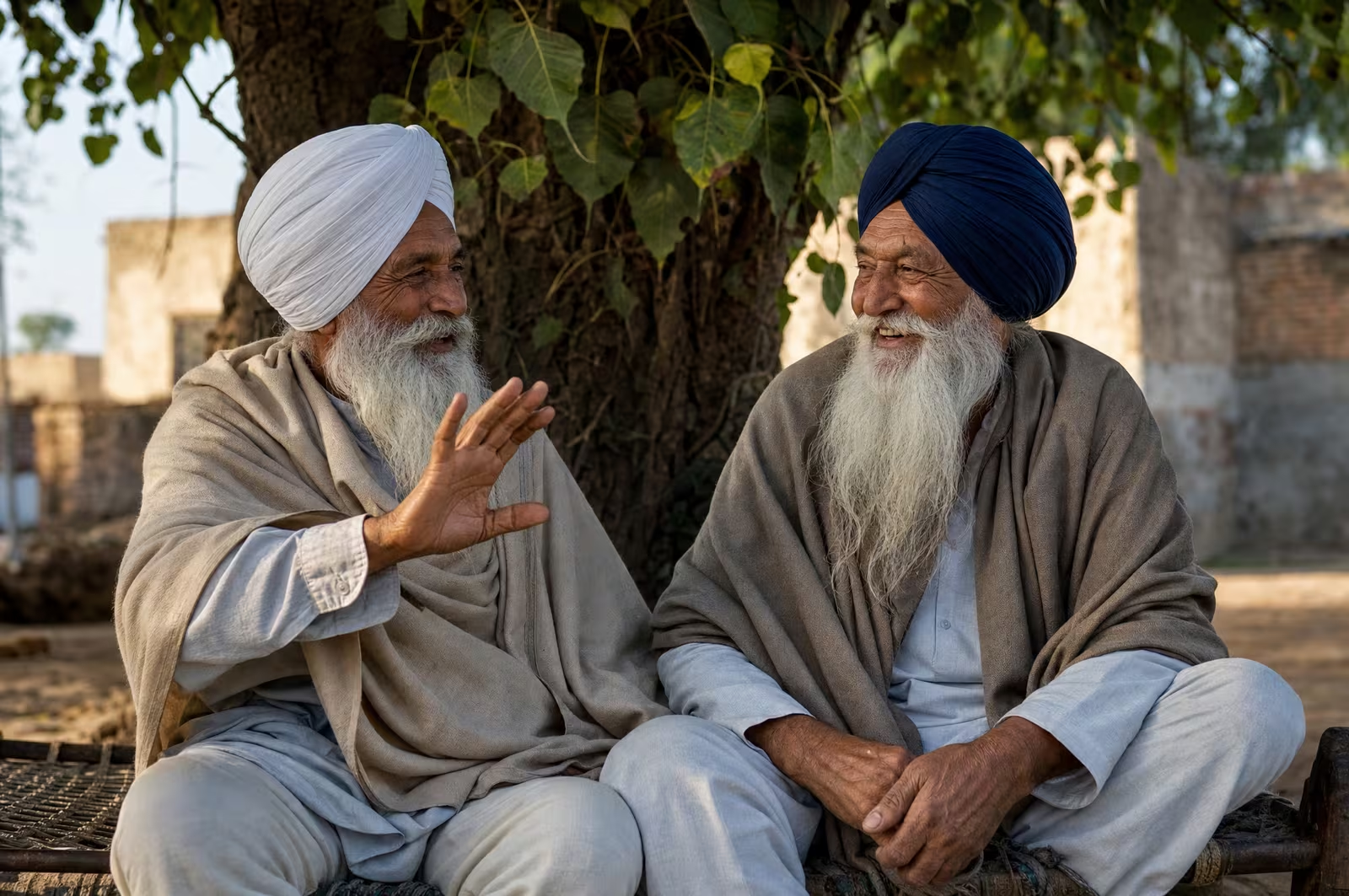
My nani never gave advice in straight sentences. She gave it in akhaan, proverbs, usually delivered sideways while she was doing something else, and usually involving a buffalo or a crop or somebody's mother-in-law. As a kid I found them baffling. As an adult I realise they were the most efficient thing she ever said: a whole worldview folded into eight words.
Punjabi proverbs (ਅਖਾਣ, akhaan) are earthy, blunt and frequently hilarious. They come from a farming culture, so they're full of fields, animals and weather, and they almost never bother being polite. In that respect they are close cousins of everyday Punjabi slang. Here are ten I love, with the literal meaning and what they actually mean, because the gap between those two is where all the fun is.
What are some common Punjabi proverbs?
| Punjabi (Gurmukhi) | Literal | What it means |
|---|---|---|
| ਨੱਚਣਾ ਨਾ ਆਵੇ, ਆਂਗਣ ਟੇਢਾ | Can't dance, blames the crooked courtyard | A poor workman blames his tools. |
| ਜਿਹੜੀ ਖੋਤੀ ਨੂੰ ਪਿਆਰ, ਉਹੀ ਲੱਤ ਮਾਰੇ | The donkey you love is the one that kicks you | The ones closest to you hurt you most. |
| ਅੰਨ੍ਹਾ ਵੰਡੇ ਰੇਵੜੀਆਂ, ਮੁੜ ਮੁੜ ਆਪਣਿਆਂ ਨੂੰ | The blind man hands out sweets, again and again to his own | People in power favour their own. |
| ਘਰ ਦਾ ਜੋਗੀ ਜੋਗੜਾ, ਬਾਹਰ ਦਾ ਜੋਗੀ ਸਿੱਧ | The home saint is a nobody; the outside saint is holy | Familiarity breeds contempt; we undervalue our own. |
| ਨੌਂ ਨਕਦ, ਨਾ ਤੇਰਾਂ ਉਧਾਰ | Nine in cash beats thirteen on credit | A sure small thing beats a bigger maybe. |
| ਜਿੰਨੀ ਚਾਦਰ, ਉੱਨੇ ਪੈਰ ਪਸਾਰ | Stretch your legs as far as the sheet | Live within your means. |
| ਆਪਣਾ ਮਾਰੇ ਛਾਂ ਵਿੱਚ ਸੁੱਟੇ | Your own may hit you, but lays you in the shade | Family scolds you but still protects you. |
| ਦੂਰ ਦੇ ਢੋਲ ਸੁਹਾਵਣੇ | Drums sound sweet from far away | The grass is greener; distance flatters. |
| ਇੱਕ ਹੱਥ ਨਾਲ ਤਾੜੀ ਨਹੀਂ ਵੱਜਦੀ | One hand can't clap | It takes two to make a quarrel. |
| ਭੁੱਖੇ ਭਜਨ ਨਾ ਹੋਏ ਗੋਪਾਲਾ | A hungry man can't pray, O Lord | First things first; basics before ideals. |
A few worth sitting with
Most of those land instantly. But three of them I think reward a second look, because they say something specific about how Punjabis see the world.
ਆਪਣਾ ਮਾਰੇ ਛਾਂ ਵਿੱਚ ਸੁੱਟੇ. Your own may strike you, but they throw you in the shade. This is the entire Punjabi attitude to family in one line. Yes, your relatives are loud, intrusive and quick to criticise. They will also, without hesitation, catch you when you fall. The proverb doesn't pretend family is gentle. It promises family is loyal, which is a harder and truer thing. (If you want the actual web of relatives all this loyalty runs through, I mapped the family words separately.)
ਘਰ ਦਾ ਜੋਗੀ ਜੋਗੜਾ. The saint from your own home is treated as a fool; the one from elsewhere is revered. Nani aimed this one at me directly, more than once, usually when I'd dismissed something she said and then accepted the identical thing from a teacher. It stings because it's true. We discount the wisdom that's nearest to us simply because it's near. I think about it now whenever someone tells me they want to learn Punjabi from a fancy distant program while their grandmother sits right there, a fluent native speaker, going unasked.
ਦੂਰ ਦੇ ਢੋਲ ਸੁਹਾਵਣੇ. Drums are sweet from a distance. Get close to the drum and it's just loud. Every "easier" path looks lovely until you're standing in it. I find it a useful antidote to the fantasy that some other language, some other life, some other version of yourself, would have been simpler.
Why proverbs are a sneaky-good way in
Beyond the wisdom, akhaan are one of the better doors into the language, and for a concrete reason: they're short, rhythmic, and packed with high-frequency words. Learn ten proverbs and you've picked up ghar (home), hath (hand), pair (foot), bhukha (hungry), apna (one's own), all words you'll use constantly. It's vocabulary smuggled in inside a joke. If you're stocking your everyday word bank, these pair nicely with the common words and meanings I pulled together.
And because they rhyme and bite, they stick the way a dry word list never does. That's the same reason names, which also fold meaning into a memorable shape, are worth learning properly too (I got into the meaning behind Punjabi names if you're collecting these threads of the culture). Even the turban has sayings of its own about honour, which I cover in Punjabi clothing words.
When you reclaim a heritage language, the grammar is the boring part and the flavour is the point. Anyone can teach you that ghar means house. Only a proverb teaches you that in Punjabi, the home saint gets no respect and the donkey you love is the one that kicks you. That's not vocabulary. That's a whole way of seeing, and it's been hiding in plain sight in the things our grandmothers muttered while doing the dishes.
Learn the proverbs. You'll understand the language, and you'll understand the people who made it, which is the better prize.