Start with the words you hear every day. Learn nouns such as ਪਾਣੀ paani (water), ਰੋਟੀ roti (food, bread), ਘਰ ghar (home) and ਕੰਮ kamm (work), verbs such as ਕਰਨਾ karna (to do) and ਜਾਣਾ jaaṇa (to go), and connectors such as ਅਤੇ ate (and), ਪਰ par (but) and ਵਿੱਚ vich (in). Yes is ਹਾਂ ਜੀ haan ji and no is ਨਹੀਂ nahi(n).
A few dozen Punjabi words do most of the heavy lifting in everyday speech, learn those and you'll start catching the shape of sentences flying past you at the dinner table. This is that starter set: common nouns, verbs, and the small connector words that glue speech together, in Gurmukhi with pronunciation. A couple of them carry far more weight than their English translation suggests, and those are the ones worth lingering on.
What are the most common Punjabi nouns?
| English | Gurmukhi | Pronunciation |
|---|---|---|
| Water | ਪਾਣੀ | paani |
| Food / bread | ਰੋਟੀ | roti |
| Home | ਘਰ | ghar |
| Day | ਦਿਨ | din |
| Time | ਵੇਲਾ | vela |
| Name | ਨਾਂ | naa(n) |
| Friend | ਦੋਸਤ | dost |
| Work | ਕੰਮ | kamm |
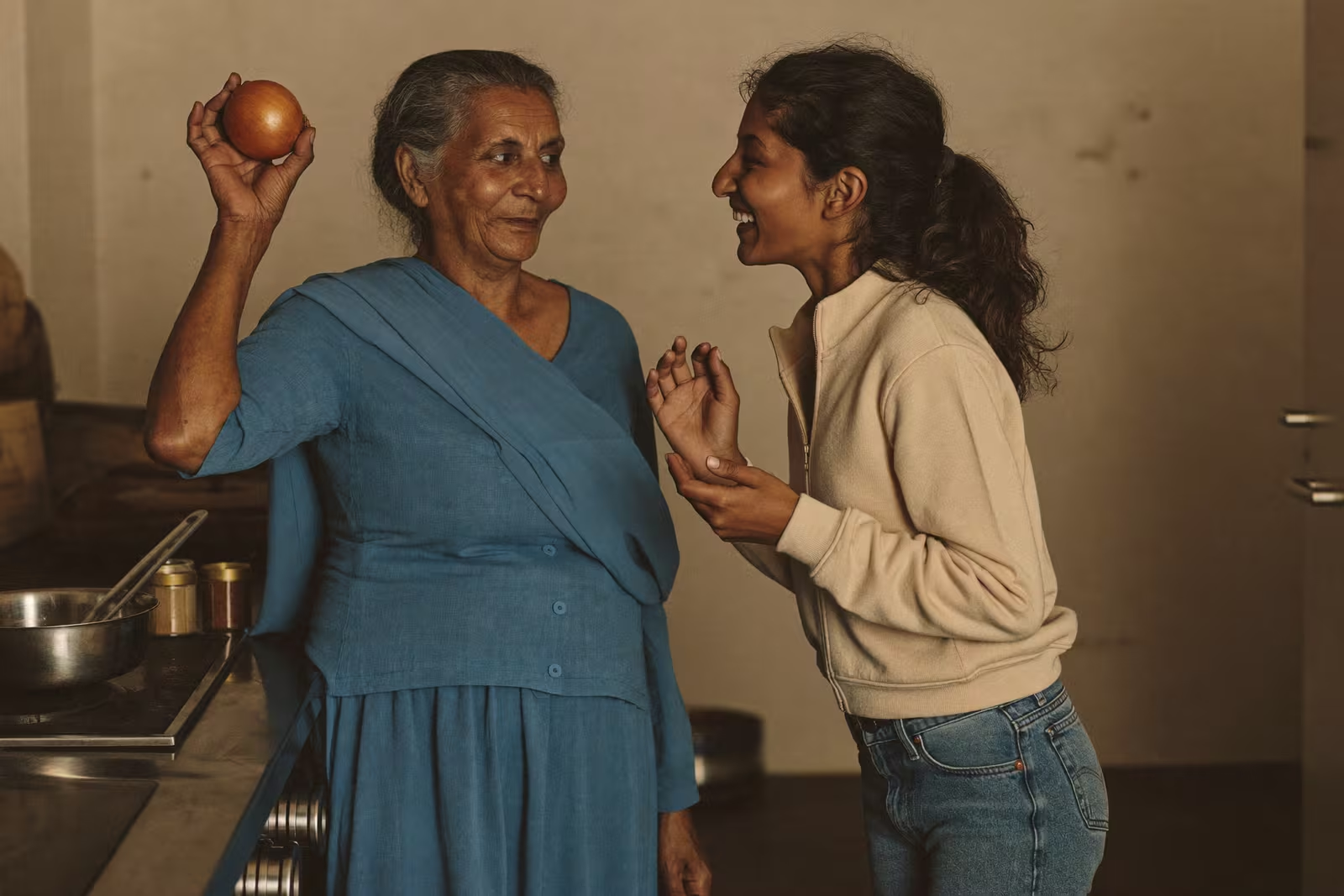
A word on roti. The table says "food / bread," but in a Punjabi household roti means a meal, sometimes life itself. Roti khaani hai? ("shall we eat?") never refers only to bread, and roti kamaani ("to earn one's roti") means to make a living. The money words themselves are in counting money in Punjabi. When a grandparent asks if you've eaten, the word they reach for is roti, carrying all of that. Same with ghar (home) and kamm (work), in a migrant family these aren't neutral, they're the whole story of why people left and what they built.
Verbs are where sentences come alive. These are among the most-used:
| English | Gurmukhi | Pronunciation |
|---|---|---|
| To do | ਕਰਨਾ | karna |
| To go | ਜਾਣਾ | jaaṇa |
| To come | ਆਉਣਾ | aauṇa |
| To eat | ਖਾਣਾ | khaaṇa |
| To drink | ਪੀਣਾ | peeṇa |
| To speak | ਬੋਲਣਾ | bolṇa |
| To see | ਵੇਖਣਾ | vekhṇa |
| To want | ਚਾਹੁਣਾ | chaahuṇa |
The connector words (small but mighty)
These tiny words appear constantly and unlock whole sentences:
| English | Gurmukhi | Pronunciation |
|---|---|---|
| And | ਅਤੇ | ate |
| But | ਪਰ | par |
| In / inside | ਵਿੱਚ | vich |
| With | ਨਾਲ | naal |
| This | ਇਹ | eh |
| That | ਉਹ | oh |
| Here | ਇੱਥੇ | itthe |
| There | ਉੱਥੇ | utthe |
How do you say yes and no in Punjabi?
- Haan ji (ਹਾਂ ਜੀ): yes (respectful)
- Nahi(n) (ਨਹੀਂ): no
- Theek hai (ਠੀਕ ਹੈ): okay / it's fine
- Acha (ਅੱਛਾ): good / I see / okay (an Urdu/Hindi loanword everyone uses; the "purer" Punjabi word for good is changa (ਚੰਗਾ), worth knowing both)
Don't memorise the table, mine your day
A list this size is tempting to cram in one sitting, and that's exactly how to forget it by Friday. Better: take the eight nouns and, over a normal day, catch each one in real life. You drink paani. You leave the ghar for kamm. You text a dost. Each time, say the Punjabi word in your head. You're not adding study time, you're tagging things you were going to do anyway, and that is what makes the word stick where a flashcard slides off.
The verbs come alive the same way, the first clumsy sentence you build (main roti khaanda haan) is worth more than ten you read. Many of these words turn up in 5 Everyday Panjabi Phrases, and reading them aloud doubles as script practice from How to Read Gurmukhi.
Panjabi Go drills these with audio and spaced repetition so the words you actually need surface first, not the rare ones. Start free.
Sources
- Roti (ਰੋਟੀ) in Maya Singh's Panjabi Dictionary, 1895 (University of Chicago DSAL)
- Achchha (ਅੱਛਾ) in Maya Singh's Panjabi Dictionary, 1895 (University of Chicago DSAL)
- Changa (ਚੰਗਾ) in Maya Singh's Panjabi Dictionary, 1895 (University of Chicago DSAL)
- Basic Punjabi 2.4: Honorific and Respectful Form (Michigan State University)