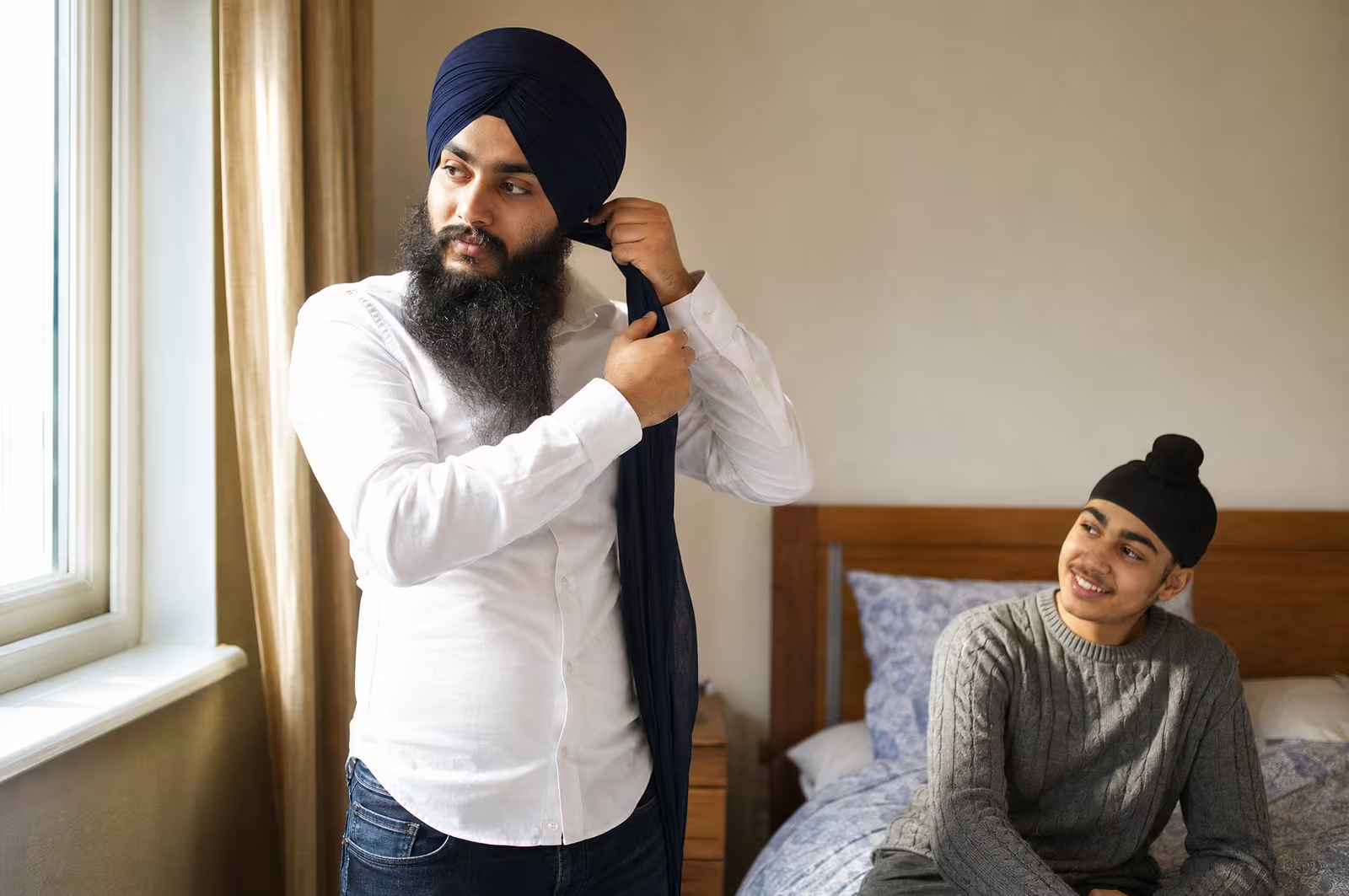
Everyday Punjabi clothing words include ਕੁੜਤਾ (kurta), a long tunic, ਸਲਵਾਰ (salwar), loose trousers, ਕਮੀਜ਼ (kameez), ਦੁਪੱਟਾ (dupatta), a long scarf, and ਪੱਗ (pagg), the turban. For a Sikh the pagg is an article of faith, not a fashion choice, and pyjama (ਪਜਾਮਾ) is a word Punjabi gave to English.
I owned a kurta pyjama for years before I could name a single part of it. It came out of the wardrobe for weddings and Gurdwara, my mum would adjust the collar, and that was the extent of my relationship with my own clothes. The vocabulary just wasn't there. It struck me one Vaisakhi, watching an uncle tie his pagg with a speed and precision that took a lifetime to learn, that I couldn't even say the word for what was on his head. Clothing words turned out to be some of the most useful and most cultural vocabulary I picked up, because in Punjabi what you wear says a lot about who you are.
What are the basic Punjabi clothing words?
| English | Gurmukhi | Pronunciation |
|---|---|---|
| Clothes | ਕੱਪੜੇ | kapṛe |
| Shirt / tunic | ਕਮੀਜ਼ | kameez |
| Long tunic | ਕੁੜਤਾ | kurta |
| Loose trousers | ਸਲਵਾਰ | salwar |
| Drawstring trousers | ਪਜਾਮਾ | pyjama |
| Turban | ਪੱਗ | pagg |
| Scarf / veil | ਚੁੰਨੀ | chunni |
| Long scarf | ਦੁਪੱਟਾ | dupatta |
| Shawl | ਸ਼ਾਲ | shaal |
| Shoes | ਜੁੱਤੀ | jutti |
| Sweater | ਸਵੈਟਰ | sweater |
| Coat | ਕੋਟ | coat |
The word pyjama (ਪਜਾਮਾ) is one Punjabi gave to English. What the West turned into bedtime wear is, in Punjab, just trousers. And jutti (ਜੁੱਤੀ), the embroidered leather shoe, is a craft in its own right, with whole towns known for the styles they make.
What does the pagg mean in Punjabi culture?
The pagg (ਪੱਗ), or dastar, is the single most loaded item of clothing in Punjabi culture, so it deserves more than a row in a table.
For a Sikh, the turban isn't a fashion choice or a regional habit, it's an article of faith, a public commitment to the values of the Guru. Tying it well is a skill passed down, usually father to son, and there are different styles that carry their own meaning and pride. You'll hear pagg used in phrases about honour too: to make someone's pagg fall is to humiliate them, and to keep your pagg high is to keep your dignity. Sayings like these run all through the language, and I collected ten favourites in Punjabi proverbs (akhaan). So when you learn this word, you're not learning a clothing item, you're learning a value.
The colour matters as well. A kesri (saffron) pagg carries the meaning I wrote about in Punjabi Colours in Gurmukhi, sacrifice and courage, which is why you see a sea of it at Vaisakhi.
The dupatta and chunni
The dupatta (ਦੁਪੱਟਾ) and chunni (ਚੁੰਨੀ) are long scarves worn with the salwar kameez. The word dupatta literally breaks down to "two widths" of cloth. Beyond style, it carries respect: women often draw it over the head when entering a Gurdwara or in the presence of elders, a gesture of modesty and reverence. Covering the head in the Gurdwara, for everyone, is non-negotiable, which is exactly why these words come up the moment you walk into one.
Talking about clothes
A few sentences to put the words to work:
- Mainu navi(n) kameez chahidi hai (ਮੈਨੂੰ ਨਵੀਂ ਕਮੀਜ਼ ਚਾਹੀਦੀ ਹੈ): "I need a new shirt"
- Eh kurta bahut sohna hai (ਇਹ ਕੁੜਤਾ ਬਹੁਤ ਸੋਹਣਾ ਹੈ): "this kurta is very beautiful"
- Kapṛe paa lao (ਕੱਪੜੇ ਪਾ ਲਓ): "put your clothes on / get dressed"
The verb here is paaunaa (to wear / put on), and notice navi(n) and sohna changing shape for the noun, the same gender agreement that runs through the whole language. Among cousins, a new outfit is just as likely to get a kamaal! (amazing), one of the casual Punjabi slang words worth knowing.
A small thing that connects you
Learning the parts of an outfit you already own is a strangely powerful shortcut. The words attach to objects in your own wardrobe, so they stick without effort, and they pair naturally with the body-part words in Punjabi Body Parts Vocabulary, since clothes and the body that wears them go hand in hand. Next time you're getting ready for a wedding, try naming each piece as you put it on. And once you are there, the boliyan sung at weddings are the next thing worth learning.
If you want to hear how pagg, jutti and dupatta actually sound rather than guessing from the spelling, that's exactly what Panjabi Go is for.