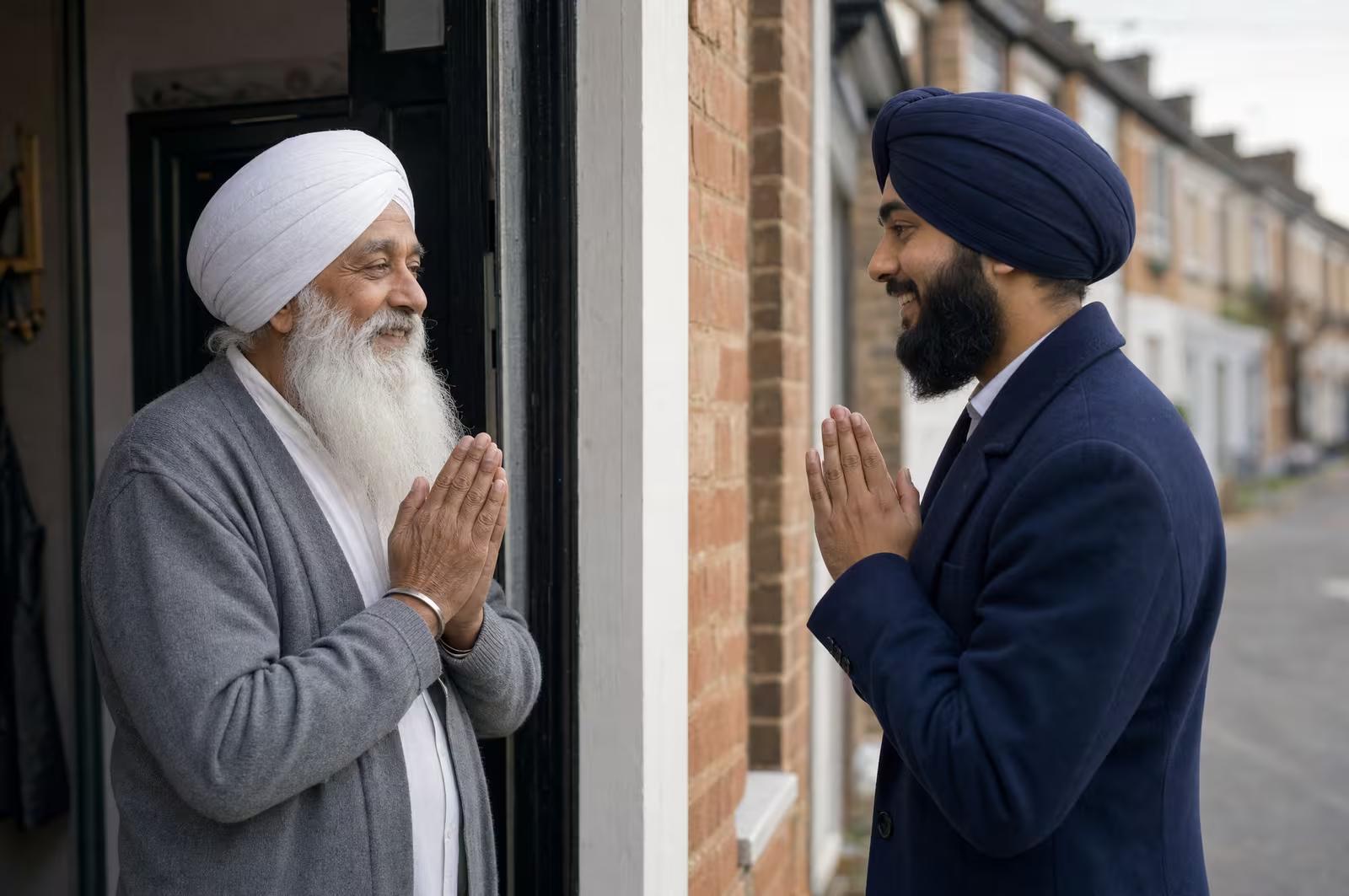
The most common way to say hello in Punjabi is Sat Sri Akal (ਸਤਿ ਸ੍ਰੀ ਅਕਾਲ), pronounced sat sree akaal. It means roughly "timeless truth is great" and works as both hello and goodbye at any time of day. In religious or formal Sikh settings, use Waheguru ji ka Khalsa, Waheguru ji ki Fateh instead.
I still remember walking into the Gurdwara as a kid, hands pressed together, and cheerfully greeting the granthi the same way I greeted the man at the corner shop: Sat Sri Akal. He smiled, but an uncle next to me corrected me gently. In that setting, to that person, you say Waheguru ji ka Khalsa, Waheguru ji ki Fateh. I spoke Punjabi well enough growing up, but moments like that taught me that greetings carry weight, who you're talking to and where you are changes the words in your mouth. So this is where I always tell people to start.
What does Sat Sri Akal mean?
Sat Sri Akal (ਸਤਿ ਸ੍ਰੀ ਅਕਾਲ), pronounced sat sree akaal, is the most common greeting among Sikhs, and many other Punjabis in India and abroad use it too. It isn't a literal "hello", it's a phrase of faith meaning roughly "God is the ultimate truth / timeless truth is great."
- Sat (ਸਤਿ): truth
- Sri (ਸ੍ਰੀ): an honorific, "great / revered"
- Akal (ਅਕਾਲ): timeless, the eternal one (a name for God)
You use it both to say hello and goodbye, and it works any time of day, including as the opener on a Punjabi phone call. When I say it to elders, hands pressed together with a slight nod, it lands as warm and respectful, and that small gesture matters as much as the words.
Other ways to greet
Depending on context and community, you'll also hear:
| Greeting | Gurmukhi | Pronunciation | Note |
|---|---|---|---|
| Sat Sri Akal | ਸਤਿ ਸ੍ਰੀ ਅਕਾਲ | sat sree akaal | most common, hello & bye |
| Waheguru ji ka Khalsa... | ਵਾਹਿਗੁਰੂ ਜੀ ਕਾ ਖ਼ਾਲਸਾ | waheguru ji ka khalsa, waheguru ji ki fateh | formal Sikh greeting |
| Sasriakal ji | ਸਸਰੀਕਾਲ ਜੀ | sasriakal ji | casual, respectful |
The full Waheguru ji ka Khalsa, Waheguru ji ki Fateh is the formal Sikh greeting and reply, used in religious and respectful settings. It's the one I should have used at the Gurdwara that day.
"How are you?" and the reply
A greeting usually leads straight into asking how someone is:
- Ki haal hai? (ਕੀ ਹਾਲ ਹੈ?): ki haal hai, "how are you?"
- Theek haan, tusi dasso? (ਠੀਕ ਹਾਂ, ਤੁਸੀਂ ਦੱਸੋ?): "I'm fine, and you?"
Notice tusi (the polite "you"), use it with anyone older or unfamiliar.
How do you say goodbye in Punjabi?
Punjabi doesn't lean on a single "goodbye." Common options:
- Sat Sri Akal again (it doubles as farewell)
- Rabb rakha (ਰੱਬ ਰਾਖਾ): "may God protect you," a warm sign-off
- Phir milange (ਫਿਰ ਮਿਲਾਂਗੇ): "we'll meet again / see you"
These pair naturally with the courtesy words in How to Say Thank You and Be Polite in Punjabi and the starter phrases in 5 Everyday Panjabi Phrases. For the bigger picture, see the complete beginner's guide.
The thing a written guide can't give you is the rhythm of Sat Sri Akal, the way the tone softens for an elder and firms up for the formal Sikh greeting. That's exactly what tripped me up as a kid, and it's why I built Panjabi Go with native-quality audio and pronunciation feedback, so you hear how it should sound and get told when you're off. You learn Gurmukhi from scratch and lock it in with spaced repetition in short daily lessons. Start free.