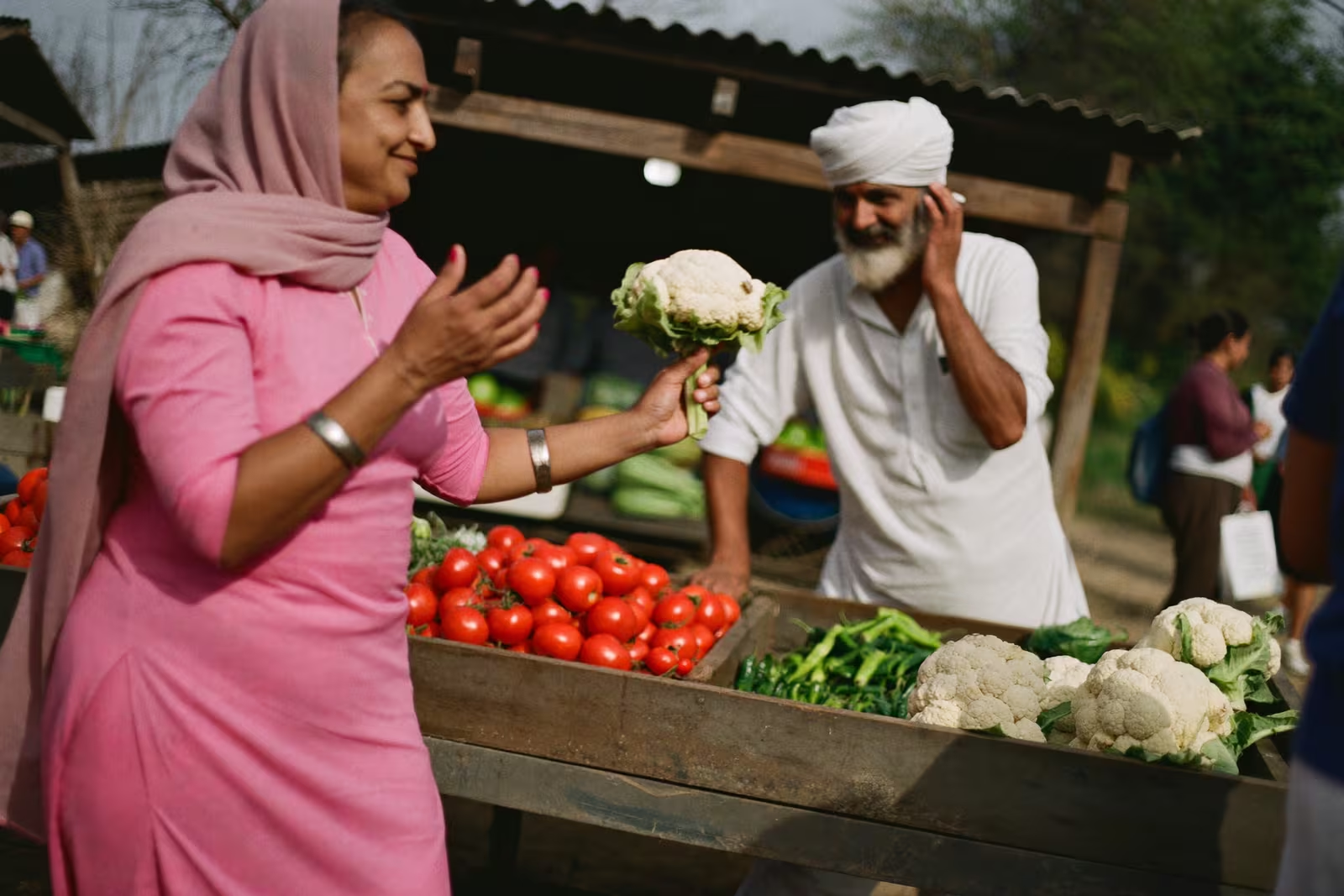
Ask the price with kinne da hai? (ਕਿੰਨੇ ਦਾ ਹੈ?), "how much is it?" Then bargain with bahut mehinga hai (ਬਹੁਤ ਮਹਿੰਗਾ ਹੈ, that's very expensive), thoda kam karo (ਥੋੜਾ ਕਮ ਕਰੋ, bring it down a little) and last price ki hai? (what's your final price?), and close the deal with theek hai, de dyo (okay, give it to me).
On my first trip to a cloth market in Punjab as an adult, I pointed at a length of fabric, the shopkeeper said a number, I nodded, and I paid it. My cousin watched the whole thing with the expression of a man witnessing a small crime. "You can't just pay it," he said. In a Punjabi bazaar, accepting the first price is not politeness, it is leaving money on the table and, frankly, denying everyone the fun. Bargaining is a conversation, a little theatre, and it runs on a handful of phrases. Once I had them, shopping stopped being something that happened to me. It also helps to understand prices in rupees when they are said fast.
Opening the conversation
| English | Gurmukhi | Pronunciation |
|---|---|---|
| How much is it? | ਕਿੰਨੇ ਦਾ ਹੈ? | kinne da hai? |
| What's the price? | ਕੀਮਤ ਕੀ ਹੈ? | keemat ki hai? |
| Show me that one | ਉਹ ਵਾਲਾ ਦਿਖਾਓ | oh waala dikhaao |
| Do you have another colour? | ਹੋਰ ਰੰਗ ਹੈ? | hor rang hai? |
Kinne da hai? is the single most useful sentence in any market, and it is one of the five I tell every beginner to learn first. Numbers are obviously the other half of the equation here, so if das (10), vee (20) and sau (100) are not yet automatic for you, spend ten minutes in Punjabi numbers 1 to 100 before your next trip. For the rest of your trip prep, I listed the Punjabi basics for visiting Punjab separately.
How do you bargain in Punjabi?
This is the heart of it. The shopkeeper names a price; your job is to gently disbelieve it:
- Bahut mehinga hai (ਬਹੁਤ ਮਹਿੰਗਾ ਹੈ): "that's very expensive." Said with a small wince for full effect.
- Thoda kam karo (ਥੋੜਾ ਕਮ ਕਰੋ): "bring it down a little."
- Sahi keemat dasso (ਸਹੀ ਕੀਮਤ ਦੱਸੋ): "tell me the right price."
- Ena nahi denge (ਏਨਾ ਨਹੀਂ ਦੇਣਗੇ): "We won't pay that much."
- Last price ki hai? (ਲਾਸਟ ਪ੍ਰਾਈਸ ਕੀ ਹੈ?): "what's your final price?" The phrase that ends most rounds.
A real tactic, not just a phrase: the slow turn toward the exit. Say "theek hai, rehn do" (ਠੀਕ ਹੈ, ਰਹਿਣ ਦਿਓ), "never mind, leave it", and take half a step away. More often than not the real price follows you out the door.
Counter-offering with numbers
To actually haggle you need to throw numbers back. The pattern is simple:
| What you mean | Gurmukhi | Pronunciation |
|---|---|---|
| I'll give a hundred | ਮੈਂ ਸੌ ਦੇਵਾਂਗਾ | main sau devaanga |
| Make it fifty | ਪੰਜਾਹ ਕਰ ਦਿਓ | panjaah kar dio |
| Two for the price of one? | ਇੱਕ ਦੇ ਭਾਅ ਦੋ? | ikk de bhaa do? |
The word bhaa (rate, going price) is the one locals use, and dropping it signals you are not a complete tourist. That alone can shave the opening number.
Closing and paying
- Theek hai, de dyo (ਠੀਕ ਹੈ, ਦੇ ਦਿਓ): "okay, give it to me" (deal done).
- Chhutta hai? (ਛੁੱਟਾ ਹੈ?): "do you have change?"
- Bag mil sakda hai? (ਬੈਗ ਮਿਲ ਸਕਦਾ ਹੈ?): "can I get a bag?"
- Dhanvaad ji (ਧੰਨਵਾਦ ਜੀ): "thank you." Always close warm, you may be back tomorrow.
When should you bargain, and when not?
Worth knowing: not every shop is a haggling shop. Street stalls, cloth markets, and roadside vendors expect it. A fixed-price store or a chemist does not, and trying to bargain there just looks odd. The rule of thumb I go by: if there is no printed price tag, the price is a starting offer. If there is a tag, pay the tag.
For the wider set of travel and market situations these phrases live inside, getting around, ordering, asking directions, I pulled them all together in Punjabi phrases for travellers.
The part you can't read off a page
Bargaining is half words and half tone. Bahut mehinga hai said flat is a complaint; said with the right lilt it is an invitation to keep talking. That musical, slightly teasing rhythm is exactly what a romanised phrase list cannot carry across, you have to hear it. That is why pronunciation and real native-quality audio sit at the centre of Panjabi Go, so the mehinga that comes out of your mouth sounds like a regular at the bazaar and not a nervous visitor reading from notes. Learn the numbers, learn the lilt, and the next market is yours.