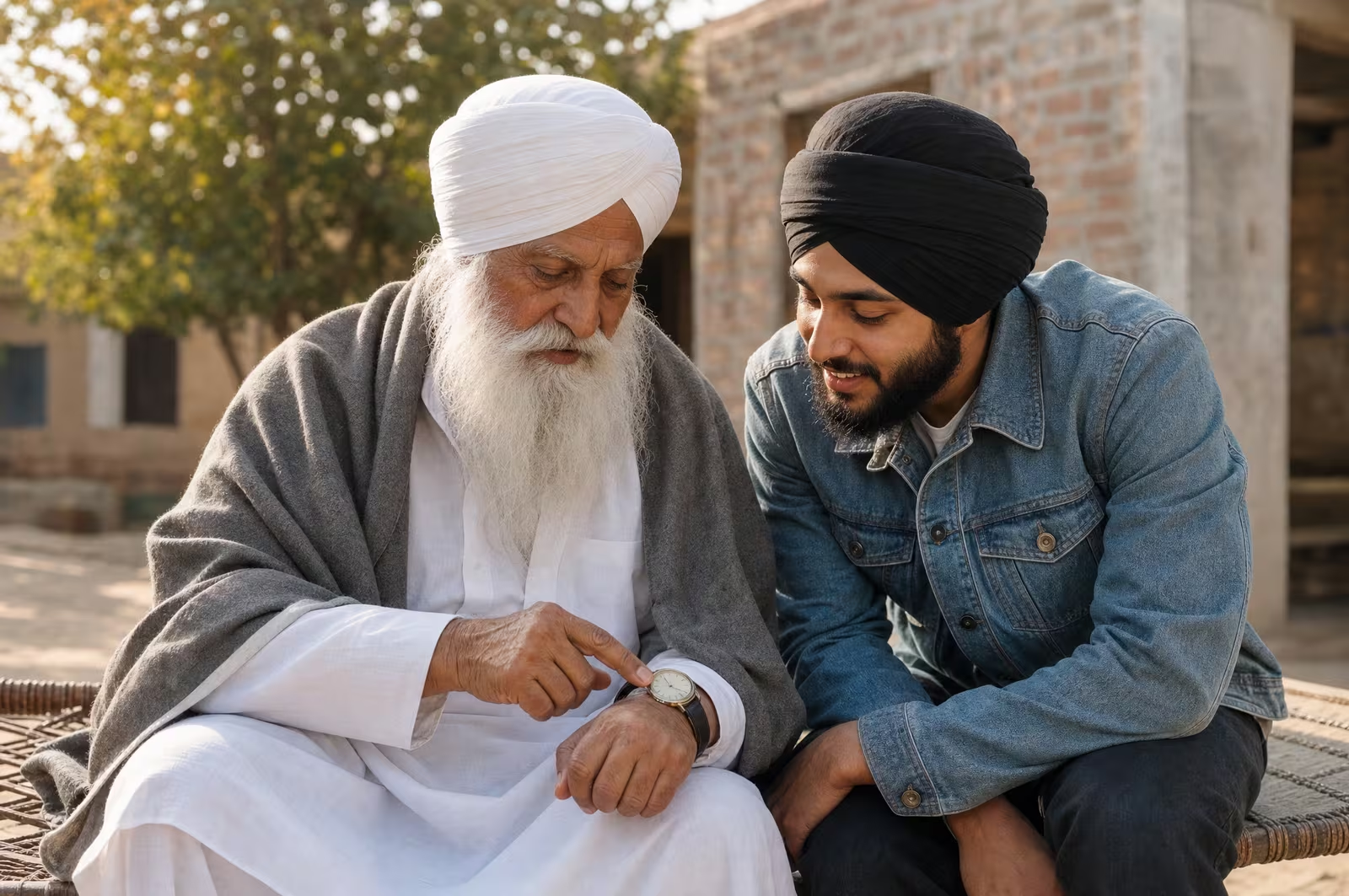
The Punjabi days of the week are somvaar, mangalvaar, buddhvaar, veervaar, shukkarvaar, shanivaar and aitvaar, each ending in -vaar (ਵਾਰ), meaning "day". For months, the English names are commonly used. To ask the time, say ki vajje ne? (ਕੀ ਵੱਜੇ ਨੇ?), and answer with a number plus vajje: panj vajje han (it's five o'clock).
I was on a call with my chacha in Jalandhar, trying to fix a time to ring back, and I said "panj vajje" with the confidence of a man who had heard it a thousand times but never once said it himself. I landed the stress in the wrong place and he paused, then gently repeated it back to me the right way. Growing up I understood all of this. Days, months, telling the time, it washed over me at the dinner table for years. Saying it out loud as an adult was a different thing entirely. So here is the vocabulary I had to actually pin down: days, months, and time in Punjabi, in Gurmukhi with plain pronunciation.
What are the days of the week in Punjabi?
| English | Gurmukhi | Pronunciation |
|---|---|---|
| Monday | ਸੋਮਵਾਰ | somvaar |
| Tuesday | ਮੰਗਲਵਾਰ | mangalvaar |
| Wednesday | ਬੁੱਧਵਾਰ | buddhvaar |
| Thursday | ਵੀਰਵਾਰ | veervaar |
| Friday | ਸ਼ੁੱਕਰਵਾਰ | shukkarvaar |
| Saturday | ਸ਼ਨੀਵਾਰ | shanivaar |
| Sunday | ਐਤਵਾਰ | aitvaar |
The thing that finally made these stick for me was the -vaar (ਵਾਰ) ending, which means "day." Once I clocked that every day name is just a word plus -vaar, the whole list stopped being seven things to memorise and became one pattern with seven prefixes. Most word sets are not that tidy: Punjabi animal names and the words for body parts share no ending, so they go in one word at a time.
Months
Punjabi speakers commonly use the English/Gregorian month names (just pronounced with a Punjabi accent), so January, February, etc. are widely understood. But there's also a traditional Punjabi/Nanakshahi calendar with its own month names:
| Traditional month | Gurmukhi | Rough season |
|---|---|---|
| Chet | ਚੇਤ | March–April |
| Vaisakh | ਵੈਸਾਖ | April–May |
| Jeth | ਜੇਠ | May–June |
| Harh | ਹਾੜ੍ਹ | June–July |
| Sawan | ਸਾਉਣ | July–August |
| Bhadon | ਭਾਦੋਂ | August–September |
You'll meet these names in folk songs, festivals (like Vaisakhi), and Gurbani. For everyday plans, the English month names are perfectly normal.
How do you tell the time in Punjabi?
The building blocks:
- Ki vajje ne? (ਕੀ ਵੱਜੇ ਨੇ?): "what time is it?"
- Vajje (ਵੱਜੇ): o'clock
- Vela (ਵੇਲਾ): time
To say the hour, pair a number with vajje. One o'clock is singular, vajja:
| Time | Punjabi | Pronunciation |
|---|---|---|
| It's one o'clock | ਇੱਕ ਵੱਜਾ ਹੈ | ikk vajja hai |
| It's two o'clock | ਦੋ ਵੱਜੇ ਹਨ | do vajje han |
| It's five o'clock | ਪੰਜ ਵੱਜੇ ਹਨ | panj vajje han |
You'll need your numbers for this, which is exactly why Punjabi Numbers 1 to 100 is worth learning first. Other useful time words: sver (ਸਵੇਰ, morning), dupehar (ਦੁਪਹਿਰ, afternoon), shaam (ਸ਼ਾਮ, evening), raat (ਰਾਤ, night). For half past, quarter past and quarter to, see how to tell the time in Punjabi.
Practise the part a table can't teach
What tripped me up on that call was never the spelling. It was the sound. The way vajje falls, where the weight sits in shukkarvaar, how ki vajje ne runs together when a native speaker actually asks it. A table on a page gives you the words but not the rhythm, and the rhythm is the half that families notice. So the useful drill is not "write it ten times," it is to say each day name aloud chasing the -vaar into the same place every time, and to read the day names off your own week as you plan it, which doubles as script practice from How to Read Gurmukhi. For the vajje construction you also lean on your numbers, which is why Punjabi Numbers 1 to 100 is worth having down first, and the wider "use it in real sentences" method runs through the complete beginner's guide.
That sound is exactly the gap a static guide leaves open. Panjabi Go closes it with audio for every day, month, and time phrase, plus pronunciation feedback that tells you when your vajje lands wrong instead of leaving you to find out on a call to Punjab. It teaches Gurmukhi from scratch and uses short daily lessons with spaced repetition, so the -vaar endings and vajje come out without you reaching for the table. Start free.