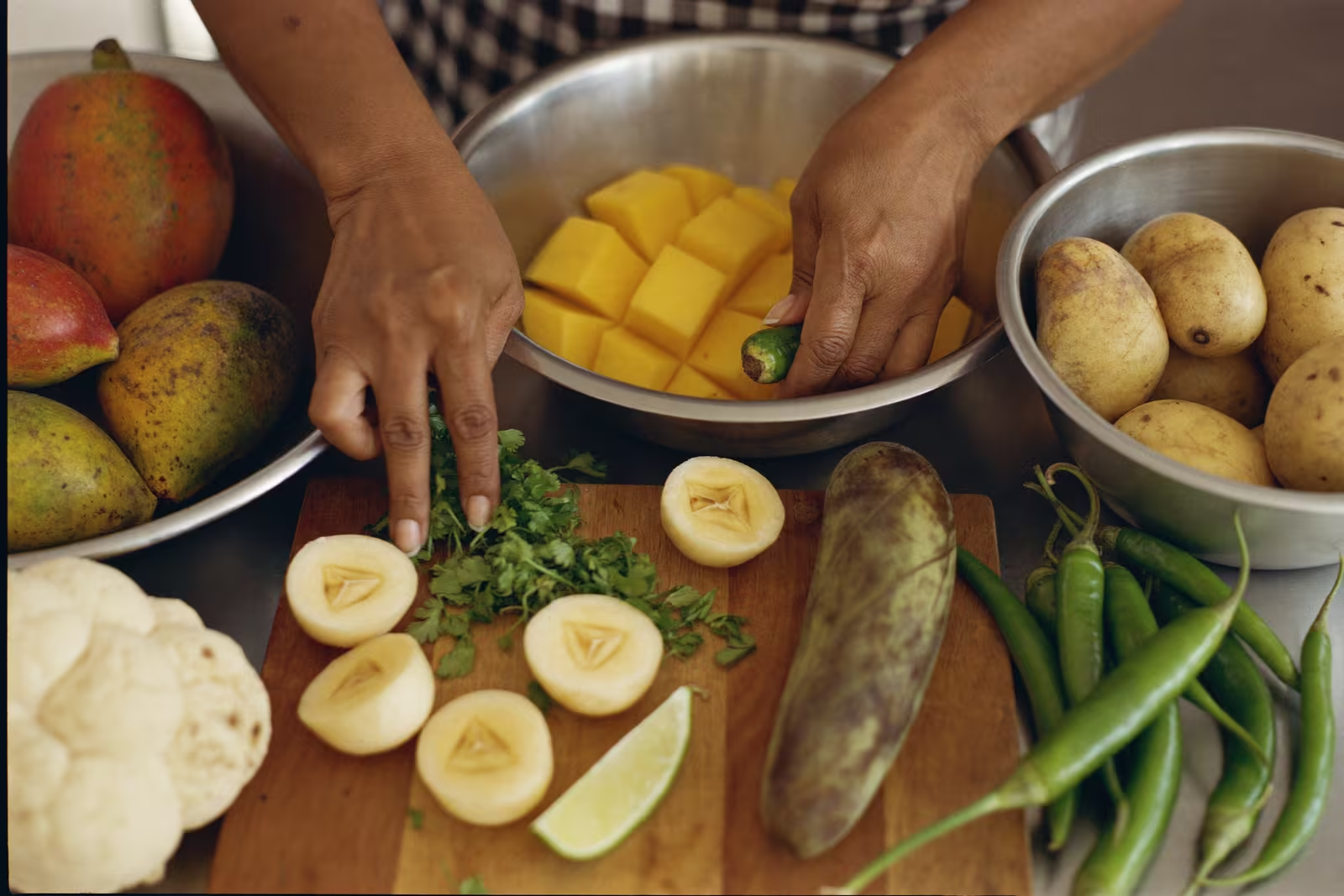
A mango is amb (ਅੰਬ) in Punjabi, a banana kela (ਕੇਲਾ), an apple seb (ਸੇਬ), a potato aalu (ਆਲੂ) and a cauliflower gobi (ਗੋਭੀ). At the market, sabzi (ਸਬਜ਼ੀ) means vegetables, phal (ਫਲ) means fruit, and the phrase you will use most is eh kinne da hai? (ਇਹ ਕਿੰਨੇ ਦਾ ਹੈ?), "how much is this?"
Saturday mornings in my childhood meant the sabzi mandi, the vegetable market, except ours was a Punjabi grocer's at the end of a grey English high street. My mum would move through it at speed, picking up bhindi, pressing a thumb into the aam to check it was ripe, arguing the price of dhania in fast, sure Punjabi. I'd trail behind holding the bags. Years of English later, half those names had slipped away from me. Fruit and veg names were among the first words I drilled when I came back to the language, partly out of guilt, because I'd handled these things a thousand times and let their names go.
What are fruits called in Punjabi?
| English | Gurmukhi | Pronunciation |
|---|---|---|
| Mango | ਅੰਬ | amb |
| Banana | ਕੇਲਾ | kela |
| Apple | ਸੇਬ | seb |
| Orange | ਸੰਤਰਾ | santra |
| Grapes | ਅੰਗੂਰ | angoor |
| Pomegranate | ਅਨਾਰ | anaar |
| Guava | ਅਮਰੂਦ | amrood |
| Watermelon | ਤਰਬੂਜ਼ | tarbooz |
| Lemon | ਨਿੰਬੂ | nimboo |
| Sugarcane | ਗੰਨਾ | ganna |
The amb (ਅੰਬ), mango, deserves its own paragraph. In Punjab it's not just a fruit, it's a season. When the amb arrives in summer, families buy them by the crate, eat them over a sink because there's no dignified way to do it, and a good one will start an argument about which variety is best. ganna (ਗੰਨਾ), sugarcane, is the other one with cultural weight, the fields of it are everywhere in Punjab, and fresh-pressed cane juice from a roadside cart is a garmi ritual.
What are the Punjabi names for vegetables?
| English | Gurmukhi | Pronunciation |
|---|---|---|
| Potato | ਆਲੂ | aalu |
| Onion | ਪਿਆਜ਼ | pyaaz |
| Tomato | ਟਮਾਟਰ | tamaatar |
| Cauliflower | ਗੋਭੀ | gobi |
| Okra | ਭਿੰਡੀ | bhindi |
| Spinach | ਪਾਲਕ | paalak |
| Carrot | ਗਾਜਰ | gaajar |
| Peas | ਮਟਰ | matar |
| Garlic | ਲਸਣ | lasaṇ |
| Ginger | ਅਦਰਕ | adrak |
| Green chilli | ਮਿਰਚ | mirch |
| Coriander | ਧਨੀਆ | dhania |
Some of these you already half-know from menus. aalu gobi (potato and cauliflower) is a dish so common it's basically one word. gaajar turns into gajrela, the carrot dessert, and matar sits next to paneer on half the menus you've read in Punjabi Food Words and Menu Guide. Once they are cooked and served, the phrases for the dinner table take over.
The market words you'll need
Naming the produce is only half of it, the mandi is a place of transactions and bargaining:
| English | Gurmukhi | Pronunciation |
|---|---|---|
| Vegetables (collectively) | ਸਬਜ਼ੀ | sabzi |
| Fruit | ਫਲ | phal |
| Fresh | ਤਾਜ਼ਾ | taaza |
| Ripe | ਪੱਕਾ | pakka |
| How much? | ਕਿੰਨੇ ਦਾ? | kinne da? |
| Cheap | ਸਸਤਾ | sasta |
| Expensive | ਮਹਿੰਗਾ | mehnga |
The single most useful phrase at any stall is eh kinne da hai? (ਇਹ ਕਿੰਨੇ ਦਾ ਹੈ?), "how much is this?". Follow it with bahut mehnga hai (it's very expensive) and you've earned a little respect, and probably a better price.
A trick that ties two lists together
Here's something that made these stick for me: most ripe fruit and veg are a colour, so describe them. Laal tamaatar (red tomato), hari mirch (green chilli), peela kela (yellow banana). You're rehearsing two vocabulary sets at once, and you hit the gender agreement from Punjabi Colours in Gurmukhi for free, because the colour has to match the noun. Stand at your own fridge and run through it.
Where the words come alive
None of this stayed in my head as a list. It came alive the day I went to that same grocer's as an adult and asked for aadha kilo bhindi, taaza (half a kilo of okra, fresh) without rehearsing it first, and the man weighed it out without blinking. That's the thing about food and produce words: they live in places you already go, so the words attach to a real bag of mangoes, a real stall, a real auntie telling you the aam aren't ripe yet.
The part a page can't teach you is the sound, the nasal amb, the soft dhania. If you want to walk into a sabzi mandi and have the words come out right rather than guessed, Panjabi Go gives you native-quality audio and pronunciation feedback to practise on before you're standing at the counter.