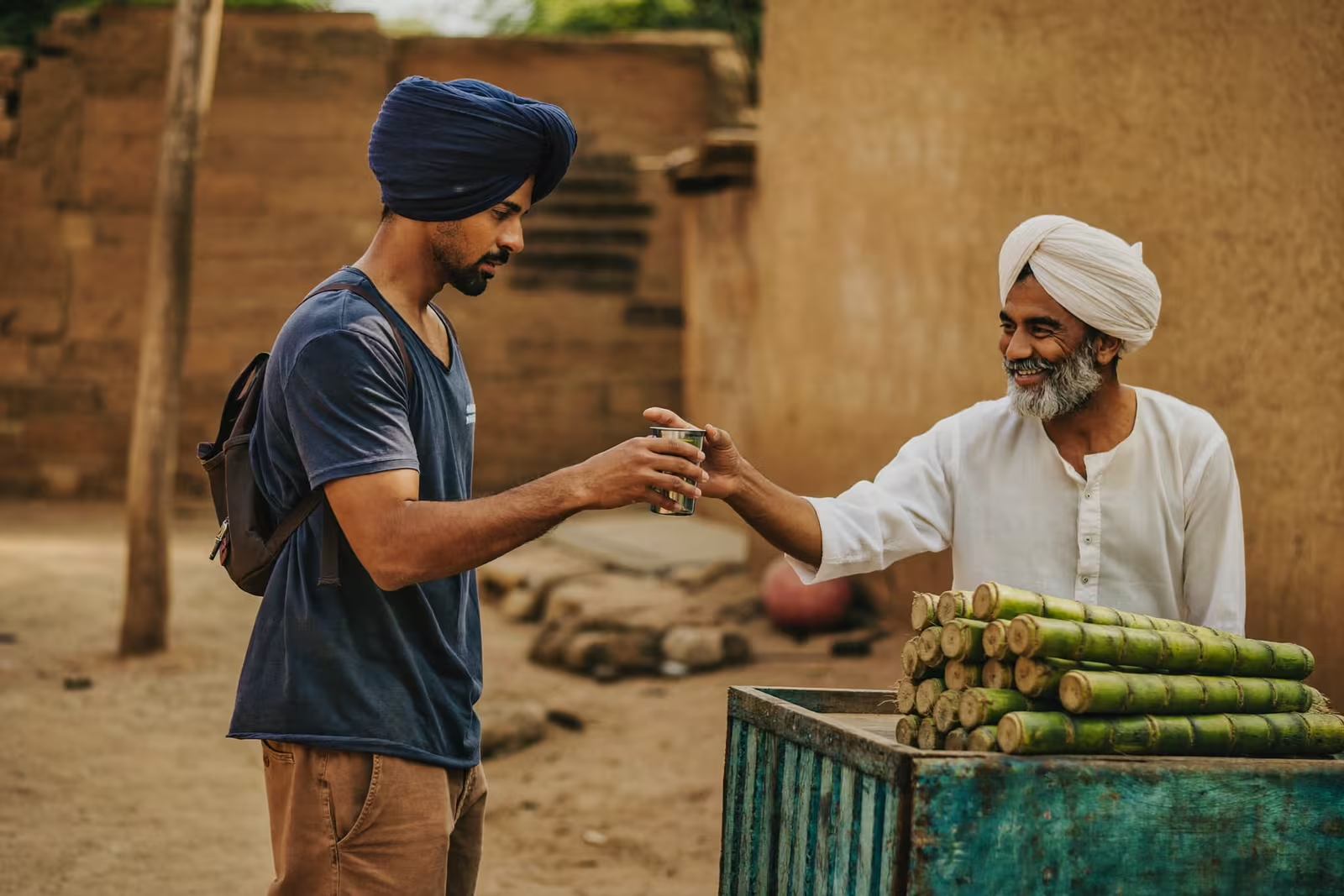
Money in Punjabi is paise (ਪੈਸੇ), and the currency is the rupaya (ਰੁਪਇਆ), plural rupaye (ਰੁਪਏ). To ask a price, say kinne da hai? (ਕਿੰਨੇ ਦਾ ਹੈ?), "how much is it?" The answer comes back as a number plus rupaye, such as do sau rupaye, two hundred rupees. To haggle, say ghatt karo, "make it less".
The first time I tried to pay for something at a shop near my nani's pind, I froze. Not because I could not speak, but because the moment money came up, the numbers and the words for cash all tangled together in my head. The shopkeeper said a price, I heard a blur, and I just handed over a note and hoped. If you have ever nodded along to a price you did not actually catch, this one is for you.
Money is its own little vocabulary. You can know your numbers cold and still stall when someone says do sau and you are not sure if they mean two hundred rupees or two hundred of something else. So let us nail the words around cash, then the questions that get you through an actual transaction.
What is the word for money in Punjabi?
The everyday word is paise (ਪੈਸੇ), which literally means the small coins but is used the way we say "money" in general. "Mere kol paise nahi" means "I do not have money." The currency unit is the rupaya (ਰੁਪਇਆ), plural rupaye (ਰੁਪਏ).
| English | Gurmukhi | Pronunciation |
|---|---|---|
| money | ਪੈਸੇ | paise |
| rupee | ਰੁਪਇਆ | rupaya |
| rupees | ਰੁਪਏ | rupaye |
| change (coins) | ਖੁੱਲ੍ਹੇ | khulle |
| note | ਨੋਟ | not |
| expensive | ਮਹਿੰਗਾ | mahinga |
| cheap | ਸਸਤਾ | sasta |
| free | ਮੁਫ਼ਤ | muft |
How do you ask "how much is it?" in Punjabi?
The single most useful question is kinne da hai? (ਕਿੰਨੇ ਦਾ ਹੈ?), "how much is it?" Pronounced kinne da hai. If the thing is feminine, you will hear kinne di hai? instead, but kinne da hai will be understood everywhere and is the one I lean on. Gender changes word endings all over Punjabi, even in how you say I love you.
The answer comes back as a number plus rupaye:
- ਪੰਜਾਹ ਰੁਪਏ, panjaah rupaye, fifty rupees
- ਸੌ ਰੁਪਏ, sau rupaye, one hundred rupees
- ਦੋ ਸੌ ਰੁਪਏ, do sau rupaye, two hundred rupees
- ਪੰਜ ਸੌ ਰੁਪਏ, panj sau rupaye, five hundred rupees
This is exactly why getting your numbers solid pays off so fast. If your hundreds and tens are shaky, prices will keep slipping past you, and the Punjabi numbers 1 to 100 guide is the fix. Sau (hundred) is the word that does most of the heavy lifting at a market, so drill that one early.
Saying a price is too high
In most small shops and at market stalls, a bit of back-and-forth on price is normal, so it helps to have a few lines ready:
| English | Gurmukhi | Pronunciation |
|---|---|---|
| It is too expensive | ਬਹੁਤ ਮਹਿੰਗਾ ਹੈ | bahut mahinga hai |
| Make it less | ਘੱਟ ਕਰੋ | ghatt karo |
| The last price? | ਆਖ਼ਰੀ ਕੀਮਤ? | aakhri keemat? |
| I will give a hundred | ਮੈਂ ਸੌ ਦਿਆਂਗਾ | main sau diaanga |
| Give me change | ਖੁੱਲ੍ਹੇ ਦਿਓ | khulle dio |
The word keemat (ਕੀਮਤ) means "price," and ghatt karo ("make it less") is the polite, friendly nudge you will hear traded back and forth all day at any bazaar. Said with a smile, it is part of the fun, not a fight.
A tiny exchange, start to finish
Here is the whole thing as one small dialogue, the kind I now get through without sweating:
- You: Eh kinne da hai? (ਇਹ ਕਿੰਨੇ ਦਾ ਹੈ?) "How much is this?"
- Shopkeeper: Do sau rupaye. "Two hundred rupees."
- You: Bahut mahinga hai, ghatt karo. "That is expensive, make it less."
- Shopkeeper: Theek hai, sau pachaas. "Fine, one fifty."
- You: Theek hai. Khulle dio. "Okay. Give me change."
That is a complete transaction, and none of it needs perfect grammar. It needs the number words and four or five set phrases, said with enough confidence that you actually hear the reply.
If you are heading to Punjab and want the broader survival kit around this, the phrases for travellers post covers the rest of the day, from greetings to asking for directions.
The part a written list cannot do is train your ear for a price said fast, in a noisy market, with no time to decode it letter by letter. That is the exact wall I hit. What got me over it was hearing the numbers and price words spoken by native speakers, again and again, until do sau and panjaah landed instantly instead of being puzzled out. That is the kind of listening drill Panjabi Go is built around, short daily reps with real audio, so the next time a shopkeeper names a price you just know it.