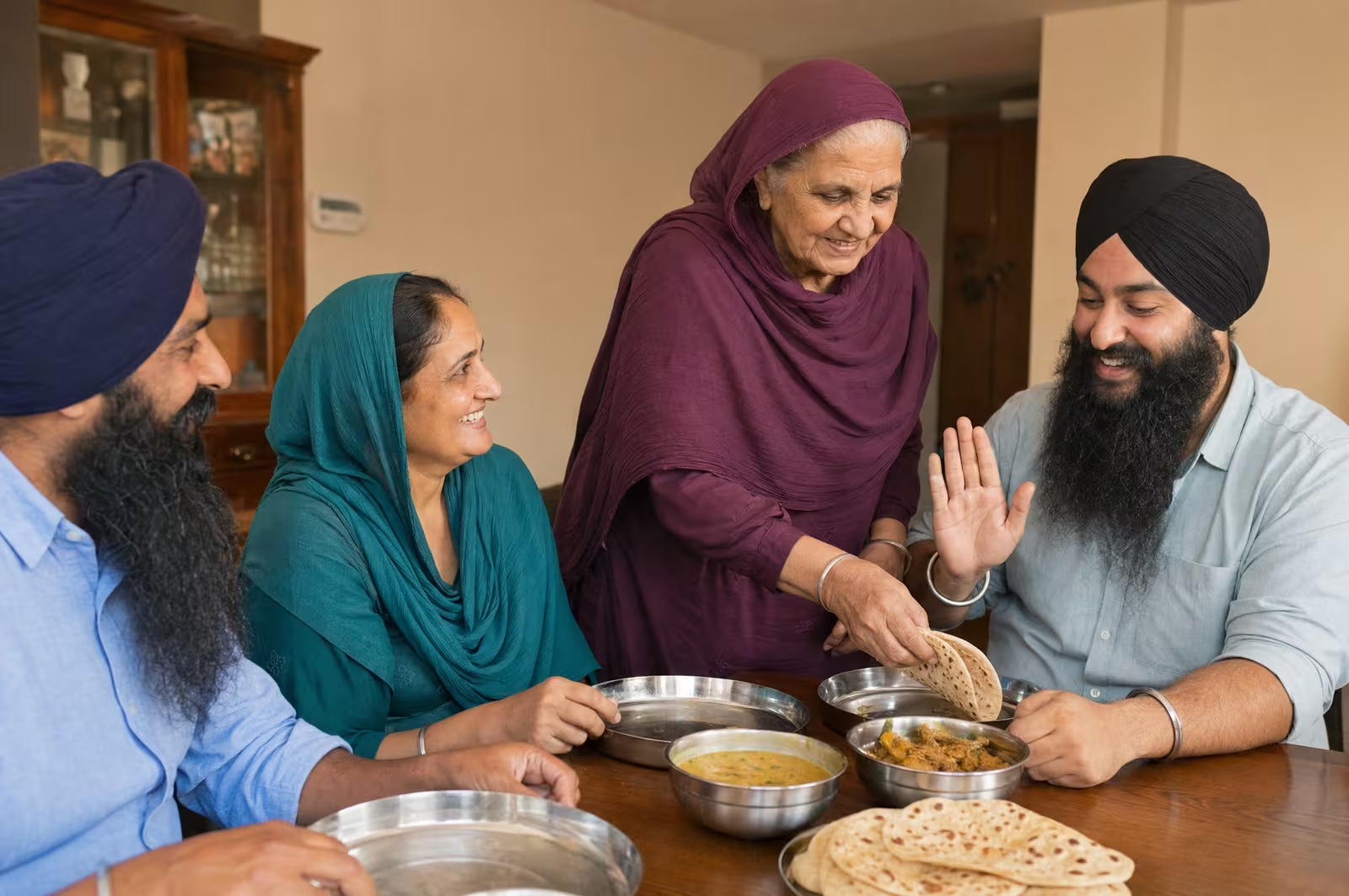
At a Punjabi dinner table, roti faṛaao (ਰੋਟੀ ਫੜਾਓ) means "pass the roti", bahut swaad hai! (ਬਹੁਤ ਸੁਆਦ ਹੈ!) means "it's delicious" and mera pet bhar gaya (ਮੇਰਾ ਪੇਟ ਭਰ ਗਿਆ) means "I'm full". You will need bas (enough) most, because once your plate looks empty someone says hor lai lao (ਹੋਰ ਲੈ ਲਓ), "have some more".
In my house growing up, dinner was in Punjabi, because it was the only language my parents spoke. Outside the house, English slowly took over, and over the years a whole register of words slipped away from me. I could understand "hor lai lao" perfectly well. I had just stopped saying it. So when I finally sat at a table in my nani's pind and wanted to ask someone to pass the dahi, I realised the most everyday vocabulary in the world, the dinner table kind, was the part I was missing. These are the phrases that fixed that.
Before you eat
| English | Gurmukhi | Pronunciation |
|---|---|---|
| I'm hungry | ਮੈਨੂੰ ਭੁੱਖ ਲੱਗੀ ਹੈ | mainu bhukh laggi hai |
| Is the food ready? | ਖਾਣਾ ਤਿਆਰ ਹੈ? | khaana taiyaar hai? |
| Come and eat | ਆਓ, ਖਾਣਾ ਖਾਓ | aao, khaana khao |
| Wash your hands | ਹੱਥ ਧੋ ਲਓ | hath dho lao |
That call, aao khaana khao, is the one I most associate with home. It is rarely a question. It is an instruction delivered with love and a slight threat that the food is getting cold.
How do you say "pass the roti" in Punjabi?
This is the working set, the phrases you reach for mid-meal:
- Roti faṛaao (ਰੋਟੀ ਫੜਾਓ): "pass the roti." Literally "hand over the roti."
- Thoda paani dena (ਥੋੜਾ ਪਾਣੀ ਦੇਣਾ): "pass a little water."
- Lūṇ kithe hai? (ਲੂਣ ਕਿੱਥੇ ਹੈ?): "where is the salt?"
- Mainu daal chaahidi hai (ਮੈਨੂੰ ਦਾਲ ਚਾਹੀਦੀ ਹੈ): "I'd like some dal."
The verb faṛaaona (to hand over) is the workhorse of any Punjabi table. Swap the noun and you can ask for anything: achaar faṛaao (pass the pickle), dahi faṛaao (pass the yogurt). For the food nouns themselves, dal and roti and saag and the rest, I put the full kitchen and menu list in Punjabi food words. For the fruit and sabzi on the table, there is a list of Punjabi fruit and vegetable names.
The compliment, and the trap
Two phrases do most of the emotional work at a Punjabi meal:
- Bahut swaad hai! (ਬਹੁਤ ਸੁਆਦ ਹੈ!): "it's delicious!" Say this and mean it, it is the single best thing you can hand back to whoever cooked. To go further for someone you love, here is how to say I love you in Punjabi.
- Kis ne banaaya? (ਕਿਸ ਨੇ ਬਣਾਇਆ?): "who made this?" Asked as a compliment, always.
Now the trap. Finishing your plate at a Punjabi table is not a signal that you are done. It is a signal that you have room. The moment your thali looks empty, someone will say hor lai lao (ਹੋਰ ਲੈ ਲਓ), "have some more", and reach for the serving spoon. This is where you need your defences ready:
| English | Gurmukhi | Pronunciation |
|---|---|---|
| I'm full | ਮੇਰਾ ਪੇਟ ਭਰ ਗਿਆ | mera pet bhar gaya |
| Enough, thank you | ਬਸ ਜੀ, ਧੰਨਵਾਦ | bas ji, dhanvaad |
| Just a little | ਥੋੜਾ ਜਿਹਾ | thoda jeha |
| No more, really | ਹੋਰ ਨਹੀਂ, ਸੱਚੀਂ | hor nahi, sacheen |
The key word is bas (enough). Say it early, say it firmly, say it with a smile. Even then, the dal often lands on your plate anyway. That is not a failure of your Punjabi. That is just how the table works.
After the meal
A few softer phrases to close on:
- Pet bhar gaya, dhanvaad (ਪੇਟ ਭਰ ਗਿਆ, ਧੰਨਵਾਦ): "I'm full, thank you."
- Khaana bahut changa si (ਖਾਣਾ ਬਹੁਤ ਚੰਗਾ ਸੀ): "the food was really good."
- Chaah peeyo ge? (ਚਾਹ ਪੀਓਗੇ?): "will you have tea?" Because in a Punjabi home the meal is not actually over until the chaah arrives.
These sit alongside the other high-frequency lines I think every beginner should carry, which I rounded up in 5 everyday Panjabi phrases.
Where it sticks
None of this stuck for me from a list. It stuck at an actual table, the day I said roti faṛaao instead of reaching across, and my aunt passed it without blinking, as if I had always spoken this way. That is the magic of dinner-table vocabulary: it lives somewhere you already are every single night. The one thing a page cannot give you is the sound, the soft th in thoda, the long vowel in swaad, and that is exactly what the Panjabi Go app is built to fix, with native-quality audio and feedback so your bas ji comes out the way your nani would say it. Try one phrase at dinner tonight before you default to English.