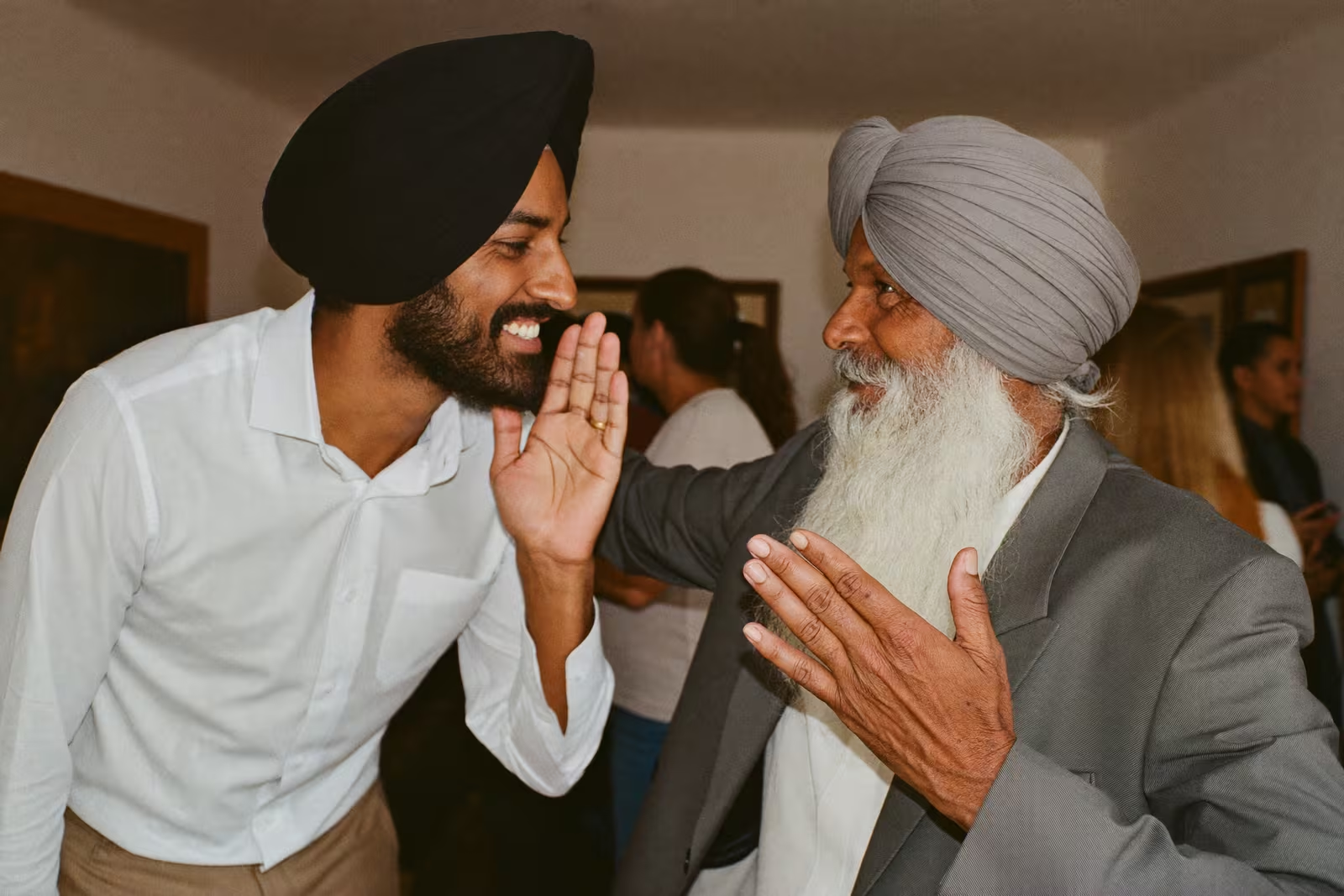
To introduce yourself in Punjabi, say Sat Sri Akal (hello), then Mera naa ... hai (my name is...) and Main ... toN haan (I am from...). A full intro sounds like: Sat Sri Akal. Mera naa Gurvinder hai. Main London toN haan. To ask the same back, use Tuhada naa ki hai? ("what's your name?").
The first time you introduce yourself in Punjabi to a relative you've only ever emailed, something shifts, you stop being the niece or nephew who "doesn't really speak it" and become, just slightly, family. That payoff is why this is the phrase to nail first. This guide gives you a complete, ready-to-say introduction: your name, where you're from, and how to ask the same back, all in Gurmukhi with pronunciation, plus the one place you'd swap the greeting out.
How do you say "my name is" in Punjabi?
| What you're saying | Punjabi | Gurmukhi |
|---|---|---|
| Hello (greeting) | Sat Sri Akal | ਸਤਿ ਸ੍ਰੀ ਅਕਾਲ |
| My name is... | Mera naa ... hai | ਮੇਰਾ ਨਾਂ ... ਹੈ |
| I am from... | Main ... toN haan | ਮੈਂ ... ਤੋਂ ਹਾਂ |
| Nice to meet you | Tuhanu mil ke khushi hoyi | ਤੁਹਾਨੂੰ ਮਿਲ ਕੇ ਖੁਸ਼ੀ ਹੋਈ |
So a full intro sounds like: Sat Sri Akal. Mera naa Gurvinder hai. Main London toN haan. ("Hello. My name is Gurvinder. I'm from London.")
How do you ask "what's your name?" in Punjabi?
A good introduction goes both ways. Turn it around with these:
- Tuhada naa ki hai? (ਤੁਹਾਡਾ ਨਾਂ ਕੀ ਹੈ?): "what's your name?"
- Tusi kithe toN ho? (ਤੁਸੀਂ ਕਿੱਥੇ ਤੋਂ ਹੋ?): "where are you from?"
- Ki haal hai? (ਕੀ ਹਾਲ ਹੈ?): "how are you?"
Notice the polite tusi/tuhada, use these with anyone you've just met. Why that matters is covered in Punjabi Pronouns.
A few extras to round it out
- Main ... saal da haan (ਮੈਂ ... ਸਾਲ ਦਾ ਹਾਂ): "I am ... years old" (you'll need your numbers)
- Main Punjabi sikh riha haan (ਮੈਂ ਪੰਜਾਬੀ ਸਿੱਖ ਰਿਹਾ ਹਾਂ): "I'm learning Punjabi." Drop this in and watch what happens: aunties soften, someone says wah, and the whole register of the conversation tilts toward helping you. It buys you endless patience for your mistakes.
One place to swap the greeting: the Gurdwara
Sat Sri Akal is right almost everywhere, but in a Gurdwara or a religious setting, the expected greeting is the fuller Waheguru ji ka Khalsa, Waheguru ji ki Fateh (ਵਾਹਿਗੁਰੂ ਜੀ ਕਾ ਖ਼ਾਲਸਾ, ਵਾਹਿਗੁਰੂ ਜੀ ਕੀ ਫ਼ਤਿਹ). Knowing which one to use where is a small thing that signals real respect, and saves you the slightly-off feeling of greeting a granthi the way you'd greet a shopkeeper.
The grammar behind it
Your introduction is really just the verb "to be" in action, mera naa ... hai, main ... haan. If you've done Punjabi Verbs and "To Be", you already understand exactly how these sentences are built.
Build your own, then ambush a relative
Here's the version that actually works. Write out your three lines, name, city, "I'm learning Punjabi", as one block. Say it on a loop until you can do it without looking, because reading it off your phone mid-greeting kills the effect. Then use it where it counts: open your next family phone call with it cold, before the conversation slips into English. The slightly nervous, unrehearsed-feeling first time is the one you'll remember, and the relative on the other end will too.
Your greeting line is covered in Punjabi Greetings: Sat Sri Akal, and the sentence machinery underneath it in Punjabi Verbs and "To Be".
Panjabi Go walks you through your own introduction with native-quality audio and pronunciation feedback, so the first words out of your mouth land right. Start free.