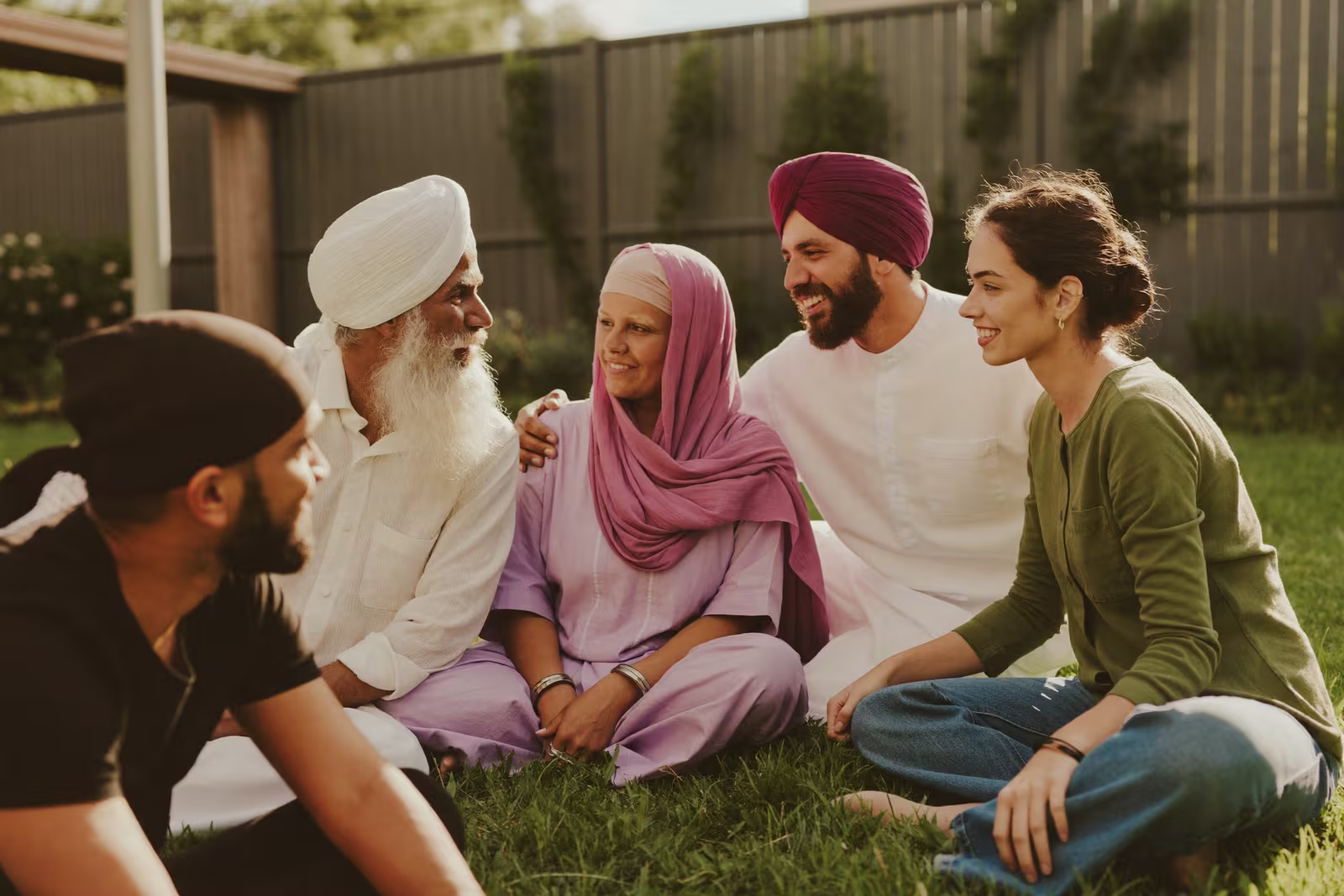
Punjabi pronouns are main (ਮੈਂ, I), tu (ਤੂੰ, casual you), tusi (ਤੁਸੀਂ, polite or plural you), oh (ਉਹ, he, she, it or they), eh (ਇਹ, this one nearby) and asi (ਅਸੀਂ, we). There is no separate word for he and she. With elders and strangers use tusi, because tu can land as disrespect.
A few years ago I was at a family wedding, finally trying to actually speak the Punjabi I had only ever understood, and I asked an older relative a question using tu. I caught the flicker on her face before she answered. Nothing was said, but I knew. To her ear I had spoken to her like she was a child. The word itself was correct. The person I aimed it at was not. That is the part no vocabulary list had taught me, and it is where I want to start, because pronouns in Punjabi are a tiny set you can memorise in an afternoon, and one of them can cost you.
What are the pronouns in Punjabi?
| English | Gurmukhi | Pronunciation |
|---|---|---|
| I | ਮੈਂ | main |
| You (casual) | ਤੂੰ | tu(n) |
| You (polite/plural) | ਤੁਸੀਂ | tusi(n) |
| He / she / it / that | ਉਹ | oh |
| This (he/she/it near) | ਇਹ | eh |
| We | ਅਸੀਂ | asi(n) |
| They | ਉਹ | oh |
The one that bit me: two words for "you"
Like French (tu/vous) or Spanish (tú/usted), Punjabi splits "you" into a casual and a polite form, and the wrong one can land as disrespect:
- Tu (ਤੂੰ): casual. Close friends, kids, people younger than you.
- Tusi (ਤੁਸੀਂ): polite/plural. Elders, strangers, anyone you respect.
My own rule after that wedding became simple: when in doubt, use tusi. No elder has ever been offended by being addressed too respectfully. It is the same instinct covered in How to Say Thank You and Be Polite in Punjabi.
Does Punjabi have separate words for he and she?
This one went the other way for me, it was a relief. Punjabi pronouns don't distinguish gender. Oh (ਉਹ) is he, she, and it. Growing up half-fluent, I never had that split-second panic of picking the right pronoun mid-sentence; context and the verb ending carry it. Fewer pronouns to memorise, and the gender, when it matters, shows up later in the verb rather than the pronoun. You can hear it in the Punjabi future tense, where the verb ending changes with the speaker's gender.
Putting them to work
Combine a pronoun with a verb and you have a sentence:
- Main jaanda haan (ਮੈਂ ਜਾਂਦਾ ਹਾਂ): "I go / I am going"
- Tusi kithe ho? (ਤੁਸੀਂ ਕਿੱਥੇ ਹੋ?): "where are you?"
- Asi ghar haan (ਅਸੀਂ ਘਰ ਹਾਂ): "we are home"
The verbs here come from Common Punjabi Words and Their Meanings, and the "to be" forms (haan, ho, hai) are covered in Punjabi Verbs and "To Be". What helped me most was going person by person through my own family, naming who gets tu and who gets tusi out loud, until the choice stopped being a decision and started being a reflex. That same grammar-in-small-doses approach runs through the complete beginner's guide.
A guide like this one has a limit. A table can tell you tu is casual and tusi is polite, but it cannot teach you the social feel, the difference between tu landing warm between friends and tu landing as an insult to an aunt. I only learned that by hearing the words inside real sentences, in real voices. That is exactly what Panjabi Go is built to do: native-quality audio so you hear how each form actually sounds, pronunciation feedback so yours matches, Gurmukhi taught from scratch, and short daily lessons with spaced repetition so the pronouns stick without cramming. Start free and let your ear catch what a table can't.