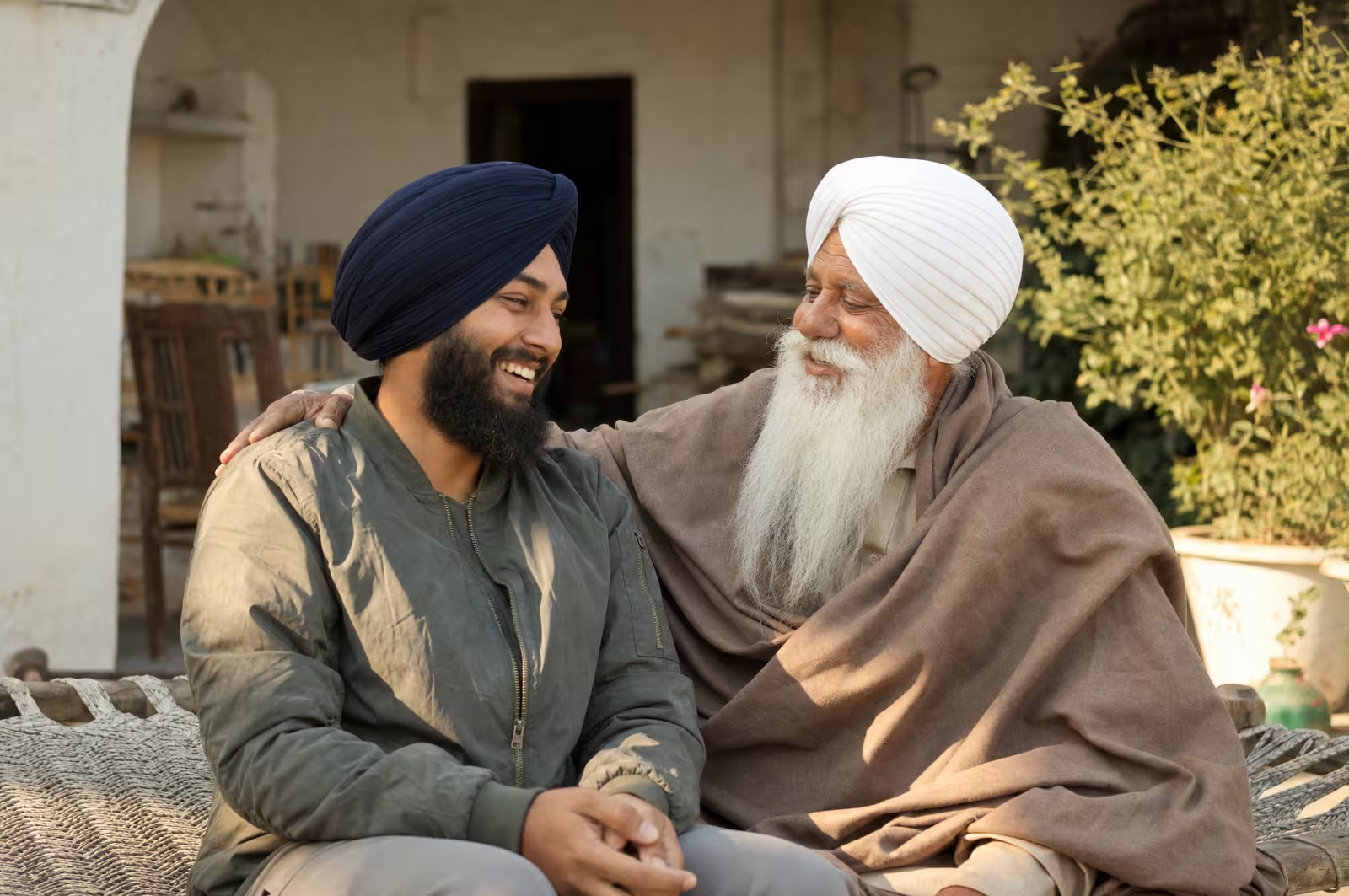
Yes, for most people, Punjabi is worth learning. It has more than 150 million speakers, is one of the most common languages in the UK and one of the largest in Canada, and is valued in healthcare, law and other public-facing jobs. For heritage learners it is a clear yes; with no Punjabi community nearby, the case is weaker.
People ask me this in two very different tones. One is the diaspora kid, half-hoping I'll tell them it's too late and they can stop feeling guilty. The other is the curious outsider weighing Punjabi against Spanish or Mandarin on a spreadsheet of "useful languages". Both deserve a straight answer, not a sales pitch, so here it is, including the parts where the answer is "it depends".
How many people speak Punjabi?
Punjabi is spoken by more than 150 million people worldwide. That is more speakers than Korean or Italian. It's one of the most common languages in the UK and one of the largest in Canada. In Punjab itself, on both sides of the India-Pakistan border, it's the everyday language of tens of millions. The dialects on each side differ mostly in accent and vocabulary, which I map out in Eastern and Western Punjabi.
If your mental model is "small heritage language," recalibrate. By raw speaker count this is a major world language that simply gets less software and fewer textbooks than its size deserves. That neglect is real, but it's a tooling gap, not a relevance gap. And it isn't a dialect of Urdu; I set out how the two differ in Punjabi vs Urdu.
The heritage case (the one I feel personally)
For a lot of people reading this, Punjabi isn't a foreign language they're choosing. It's a language that was almost theirs and slipped.
I grew up speaking it, and then English became my default at school and with friends. I have watched the same thing happen across my generation: our parents spoke Punjabi to us, and many of us slowly lost the confidence to speak it back. That's not unique to me, it's the standard diaspora arc, and I wrote about why it happens in why Punjabi is disappearing in the diaspora.
Is reversing that "worth it"? I'd put it this way. The first time you understand a joke your relatives make in Punjabi, or you read your own surname in Gurmukhi and it stops being decoration, something shifts that no career-utility argument can touch. You're not acquiring a skill. You're picking up a thread someone before you was holding. For heritage learners, that's the whole answer, and it's enough on its own.
The career and practical case
I'll keep this measured, because this is where people oversell.
Punjabi won't function like business Mandarin on a CV in most industries. But there are concrete, non-trivial payoffs:
- Public-facing roles in regions with large Punjabi populations (healthcare, law, social work, local government in parts of the UK, Canada, and California) value it. Being able to take a patient or client in their own language is a real differentiator.
- Translation and community media is a small but persistent demand.
- Trust. In Punjabi business communities, doing a deal partly in Punjabi opens doors that English alone keeps shut. That's soft, but anyone who's worked in those circles knows it's real.
Would I tell someone with zero heritage connection to learn Punjabi purely for money? No. There are more lucrative bets. But "will it ever be useful" is a clear yes for anyone living or working near a Punjabi community.
What is the case against learning Punjabi?
The fair case against: resources are thinner than for Spanish, you'll have to learn a new script if you want to read properly, and you may not get daily speaking practice unless you create it. Those are real costs. Punjabi isn't conceptually hard, though, the structure is logical and the grammar regular, which I break down in Is Punjabi Hard to Learn?. The difficulty is mostly the thin tooling, not the language.
And thin tooling is fixable. It's literally why I built an app instead of writing another blog telling people to "just immerse".
So, worth it?
My verdict, split by who's asking:
- Heritage learner: yes, unreservedly, and the longer you wait the more you'll wish you hadn't. This is the clearest yes I give.
- Partner, friend, or in-law of a Punjabi family: yes, the goodwill you'll earn is wildly disproportionate to the effort. I wrote a separate guide to learning Punjabi for a partner's family.
- Pure utility maximiser with no connection: only if you'll live or work near a Punjabi community, otherwise pick a language with more existing resources.
The thing I'd add for everyone in the first two groups: "worth it" isn't really measured in speaker counts or job listings. It's measured in the conversations you'll be able to have, and the ones your kids will be able to have, that would otherwise have ended with your generation. That's not a small thing to be the one who keeps going.