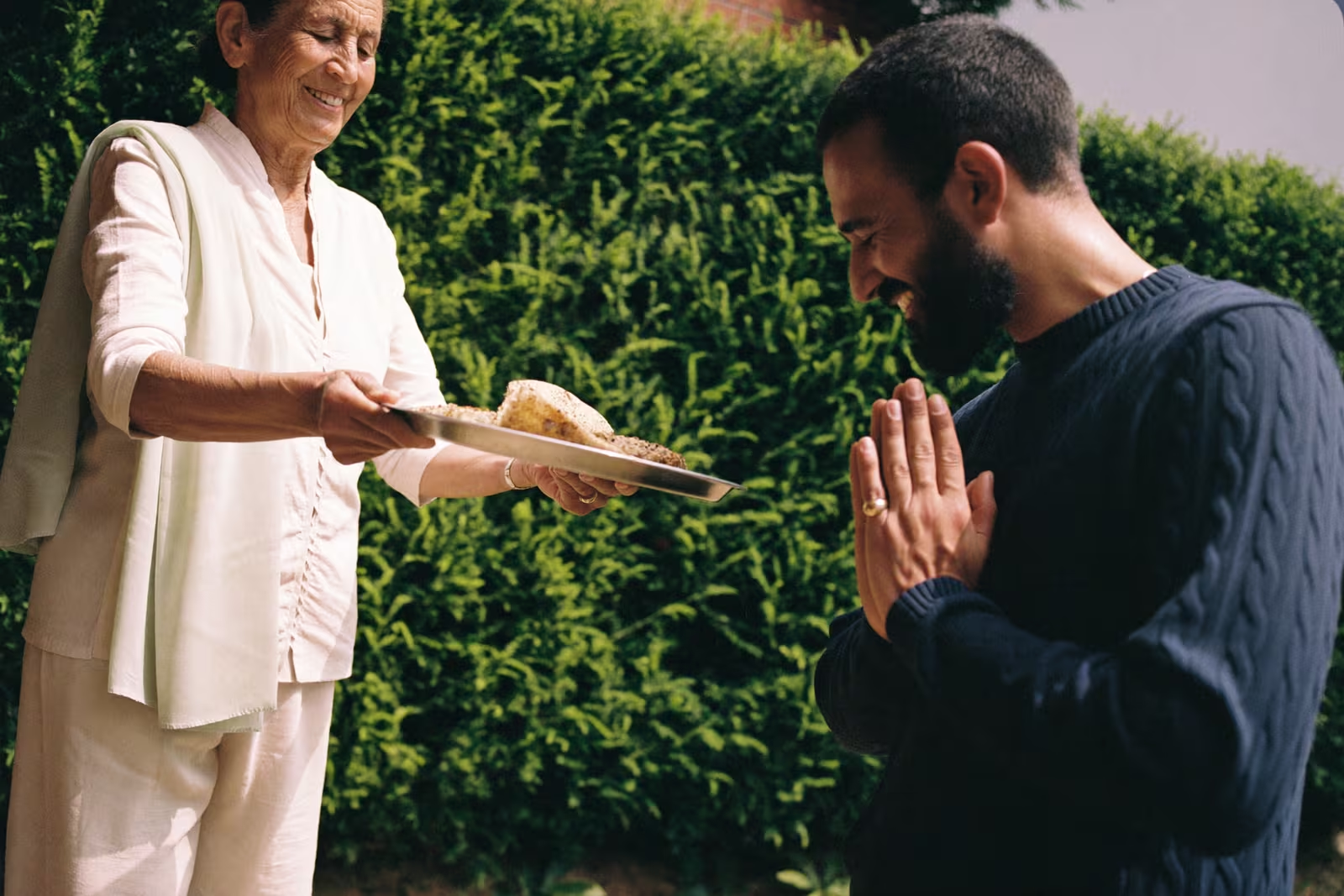
Thank you in Punjabi is dhanvaad (ਧੰਨਵਾਦ), pronounced dhan-vaad, and it works in every situation, formal or casual. Say bahut dhanvaad (ਬਹੁਤ ਧੰਨਵਾਦ) for "thank you very much" and dhanvaad ji (ਧੰਨਵਾਦ ਜੀ) to elders. When someone thanks you, reply koi gall nahi (ਕੋਈ ਗੱਲ ਨਹੀਂ).
I once said dhanvaad ji to my mum after she passed me a roti at the table, and she gave me a look I still remember. Not annoyed, just puzzled, like I had handed her a receipt. By then English had become my default outside the house, so when I made a point of using more Punjabi as an adult, I reached for the polite, textbook words with everyone. Turns out that with your own close family, thanking them for small everyday things can land as cold. The thank you puts a little distance between you, and distance is the opposite of what you mean. That is the part phrasebooks leave out, so let me start there.
When not to say thank you
With your mum, your nani, a sibling, the people who feed you without thinking about it, Punjabis often skip the formal thanks entirely. The love is assumed. Over-thanking a relative for a cup of tea can feel oddly formal, almost like you are treating them like a stranger. You show appreciation by eating the second helping, by sticking around, by haan ji and warmth, not by dhanvaad. Save the word for when it carries real weight: a real favour, a kindness from someone outside the inner circle, anyone older you want to honour.
How do you say thank you in Punjabi?
The core word is dhanvaad (ਧੰਨਵਾਦ), pronounced dhan-vaad. That opening dh is not a hard English "d": it starts closer to a plain t with a low tone on the vowel, and it took me ages to stop flattening it. It works in every situation, formal or casual.
| Phrase | Gurmukhi | Pronunciation | Use |
|---|---|---|---|
| Thank you | ਧੰਨਵਾਦ | dhanvaad | universal |
| Thank you very much | ਬਹੁਤ ਧੰਨਵਾਦ | bahut dhanvaad | emphatic |
| Thank you (respectful) | ਧੰਨਵਾਦ ਜੀ | dhanvaad ji | to elders |
That little ji (ਜੀ) again: adding it makes almost anything more respectful. Use it freely with anyone older than you.
In more religious or traditional settings you may also hear shukriya (ਸ਼ੁਕਰੀਆ), a word built on the Arabic shukr (gratitude) that is common across the wider region.
How do you say please in Punjabi?
Punjabi often carries "please" through tone and respectful phrasing rather than a single word, but these do the job:
- Kirpa karke (ਕਿਰਪਾ ਕਰਕੇ): kirpa kar-ke, "kindly / please", more formal
- Meherbani karke (ਮਿਹਰਬਾਨੀ ਕਰਕੇ): meherbani kar-ke, "be so kind as to"
Example: Kirpa karke baitho (ਕਿਰਪਾ ਕਰਕੇ ਬੈਠੋ), "please sit down."
Sorry and excuse me
| Phrase | Gurmukhi | Pronunciation | Use |
|---|---|---|---|
| Sorry / forgive me | ਮਾਫ਼ ਕਰੋ | maaf karo | apology |
| I'm sorry (respectful) | ਮਾਫ਼ ਕਰਨਾ ਜੀ | maaf karna ji | to elders |
| Excuse me (to get by/attention) | ਸੁਣੋ ਜੀ | suṇo ji | "listen, please" |
I go further into apologies in saying sorry and excuse me.
How do you say you're welcome in Punjabi?
When someone thanks you, the warm reply I grew up hearing is koi gall nahi (ਕੋਈ ਗੱਲ ਨਹੀਂ), koi gall nahi, literally "it's no matter / no problem." The other word worth having ready is vadhaaiyan, "congratulations", which I cover with the rest of the Punjabi wedding vocabulary.
The respect rules that matter most
Punjabi politeness is less about specific words and more about how you address people. Two habits carried me a long way:
- Use ji with elders, always. Dada ji, dhanvaad ji, haan ji (yes). It is the single easiest way to show respect, and its absence is noticed.
- Use tusi (ਤੁਸੀਂ), not tu (ਤੂੰ), for elders and strangers. Punjabi has a polite "you" (tusi) and a casual one (tu), just like French vous and tu. Defaulting to tusi is the safe, respectful choice; tu with an elder can sound rude.
Get those two right and even a beginner sounds considerate. The way I drilled them was simply to use them out loud the moment I learned them, the same speak-it-early approach from the beginner's guide. They also slot neatly alongside the starter set in 5 Everyday Panjabi Phrases.
I wish I had had something to learn this from when I started, because the hardest part was never the meaning. It was the sound: that low-toned dh in dhanvaad is impossible to pick up from text, and I spent months guessing. Panjabi Go is built around the thing that actually fixed it for me: native-quality audio so you hear the soft sounds, and pronunciation feedback that tells you when your dh is off. It teaches Gurmukhi from scratch and uses spaced repetition in short daily lessons, so the polite forms stick without you cramming. Start free.